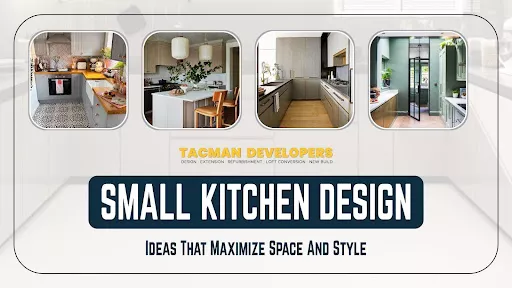
Living in London often means dealing with compact kitchens that feel restrictive. Whether you’re in a narrow Victorian terrace in Camden, a cosy 1930s semi in Croydon, or a modern flat in Newham or Barking, homeowners aged 30–60 frequently struggle to make the kitchen the heart of their home while managing space constraints.
The good news? Small kitchen design in 2026 focuses on clever solutions that make spaces feel larger, warmer, and more stylish. From my 10+ years renovating homes across London, I’ve learned that smart layouts, vertical storage, multifunctional furniture, and the right choice of colours and materials can transform even the tiniest kitchen into a functional and inviting space.
Current trends highlight warmer, earthy tones like mushroom, soft taupe, and subtle olive green, paired with freestanding or unfitted pieces and gentle curved details. Whether you prefer a modular kitchen for speed and value or a custom kitchen for a perfect fit, the goal is always functionality without compromising personality. In this guide, I’ll share practical ideas, real project examples, and step-by-step planning tips to help you create a small kitchen that is not only efficient but also beautiful, tailored specifically for London homes in 2026.
Understanding Small Kitchen Design in the UK
In densely populated Greater London, most small kitchens fall under 10–12 m². The secret to success is treating every centimetre as valuable real estate.
Modular kitchens are fantastic for speed and budget – pre-made units snap together quickly, perfect for flat or maisonette refits where disruption must be minimal. Custom kitchens, meanwhile, shine in period properties with uneven walls or quirky corners – think bespoke pull-outs that fit exactly.
Kitchen storage ideas are non-negotiable: floor-to-ceiling cabinets, pull-out larders, corner carousels, and magnetic strips make the difference between cluttered chaos and calm efficiency. In 2026, unfitted looks with freestanding pieces add character while keeping things flexible.
Always factor in UK Building Regulations – Part F for ventilation (essential in our damp climate), Part P for electrics, and Part B for fire safety in flats. Most internal refits skip planning permission, but confirm with your borough council.
From experience, mixing modular bases with custom accents often delivers the best value and style in compact kitchen UK projects.
Practical Small Kitchen Design Tips That Actually Work
These are the strategies I use on almost every small London kitchen renovation:
- Embrace vertical space – Go floor-to-ceiling with cabinets or add open shelving. This adds storage without eating floor area; I’ve gained up to 40% more usable space this way in Barking flats.
- Light, warm neutrals – Mushroom, oat, or soft taupe cabinets paired with glossy quartz or reflective tiles make rooms feel larger. 2026’s earthy shift feels cosier than stark white.
- Layered lighting – Under-cabinet LEDs for tasks, slim pendants for style, and recessed spots. Natural light is gold in London – keep windows unobstructed.
- Slim, integrated appliances – 60cm-wide dishwashers, combo ovens, and under-counter fridges. Position them ergonomically (worktops ~90cm high) for comfort.
- Multifunctional elements – Pull-out counters, drop-leaf tables, or slim wheeled islands. These give flexibility without permanent bulk.
- Curved details – Soft, rounded edges on islands or cabinets (a rising 2026 trend) improve flow and safety in tight spaces.
Small Kitchen Designs for Different UK Homes
Different property types demand tailored approaches:
- Victorian terraces (common in Camden) often have narrow, long layouts – galley designs work best. Use custom joinery to handle wonky walls, slim islands, and tall cabinets for drama.
- 1930s semis in Croydon or similar areas suit L- or U-shapes. Modular units in earthy tones maximise corners; add a peninsula for casual seating.
- Flats and maisonettes in Newham or Barking tend towards open-plan or single-wall setups. Integrate appliances fully, use bar stools for dining, and ensure excellent extraction per regulations.
Real-Life Small Kitchen Examples (UK)
Example 1: Modular kitchen in a Camden flat
This 8 m² Victorian conversion had a tight £14,500 budget (2026 prices). We installed flat-pack units in warm mushroom with glossy worktops, pull-out drawers, wall rails, and slim integrated appliances. Under-cabinet LEDs and reflective tiles created airiness. Breakdown: £7,000 units & worktops, £4,000 appliances, £3,500 labour/install. No major building regs needed beyond electrics. The space feels 30% larger and far more usable.
Example 2: Custom small kitchen in a Croydon 1930s semi
A 11 m² L-shaped space with a £28,000 budget. Bespoke olive green cabinets (2026 favourite), quartz tops, a hidden pantry, and a curved peninsula. We handled drainage updates with council approval. Breakdown: £12,000 joinery, £9,000 surfaces/appliances, £7,000 labour. The result: warm, family-friendly, and efficient.
Common Mistakes in Small Kitchen Design
From years of fixing issues, here are the top pitfalls:
- Poor storage planning – Overlooking access leads to frustration. Always measure and prioritise pull-outs/adjustable shelves.
- Ignoring the work triangle – Sink, fridge, and hob should form a compact, unobstructed loop (total distance <7m). Bad placement wastes energy and time.
- Wrong scale appliances/finishes – Oversized fridges or dark matte surfaces shrink rooms. Choose slim, energy-efficient models and test samples in your light.
- Skipping regulations – DIY electrics or poor ventilation cause safety issues and failed home surveys.
How to Plan a Small Kitchen Renovation
Follow this proven process:
- Measure & assess: Note all dimensions, obstacles, and property quirks. Sketch your ideal layout.
- Set a realistic budget: £15,000 – £35,000 is typical for London small kitchens in 2026. Include contingency.
- Choose direction: Modular for quick/affordable, custom for precision. Embrace 2026 trends like earthy tones and curves.
- Design layout: Focus on work triangle, storage, and flow.
- Check regulations: Contact the local council (e.g., Camden or Croydon) for building control if needed.
- Select professionals: Use certified fitters, electricians, and plumbers.
- Oversee & finalise: Monitor progress and get sign-off.
Conclusion
Small kitchen design in London is about turning constraints into creative opportunities. With 2026’s warm earth tones, smart vertical storage, curved details, and hybrid modular-custom approaches, your compact space can become stylish, efficient, and truly liveable – whether in a Victorian terrace, 1930s semi, or city flat.
The key takeaways? Prioritise function first, embrace light and warmth, avoid common mistakes, and plan meticulously with regulations in mind. These investments boost daily enjoyment and property value.
With over a decade of delivering seamless renovations across Greater London, my team at a specialist firm like London Renovation Experts knows exactly how to make your vision a reality. If you’re ready to transform your small kitchen, reach out for a no-obligation chat – we’d love to help you create something special.