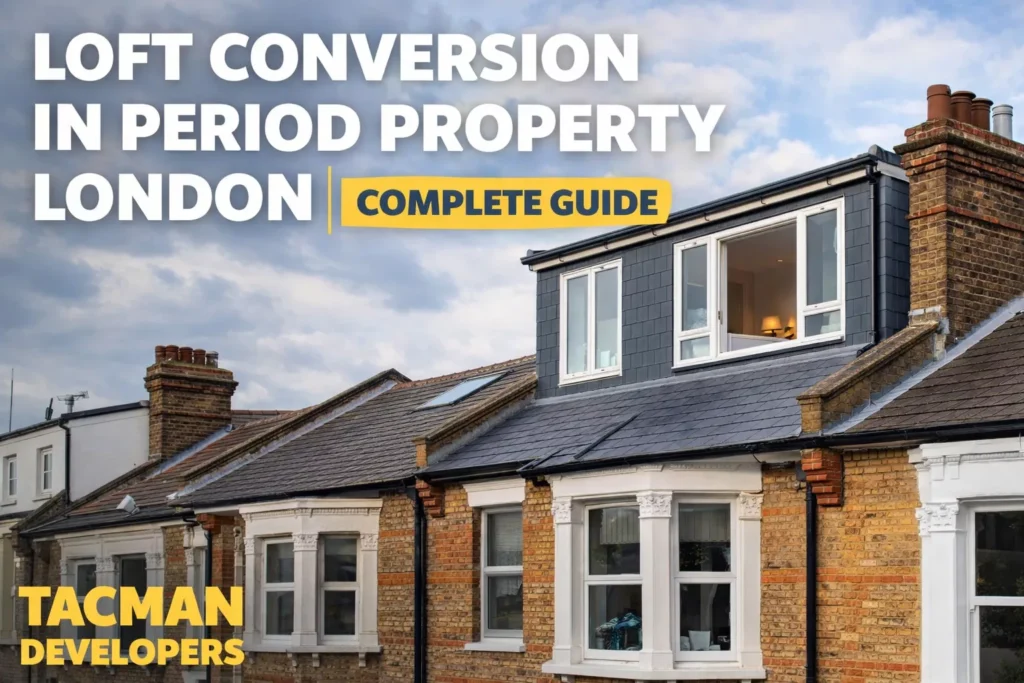
Many London homeowners live in period properties, Victorian terraces, Edwardian homes, and 1930s semi-detached houses. These homes are full of character, but they often lack space for growing families.
A loft conversion in a period property transforms unused roof space in homes such as Victorian terraces, Edwardian houses, and 1930s semi-detached properties into functional living areas. In London, homeowners often convert lofts to create bedrooms, home offices, or bathrooms without extending the footprint of the house. The project may involve dormer, mansard, or hip-to-gable designs and usually costs £45,000–£85,000 depending on property type, structure, and location.
If you own a period property in London, this guide, along with expert insights from Tacman Developers, will help you decide whether a loft conversion is the right investment for your home.
Why Loft Conversions Work Well in Period Properties
Period homes in London often have steep roof pitches and generous attic spaces, making them ideal for loft conversions. These structural characteristics allow architects to create comfortable rooms with minimal structural alterations.
Period houses were built with roof structures that often leave enough space for conversion. Compared with many modern homes, these older properties offer larger roof volumes and stronger structural frameworks.
Key advantages
-
Extra living space without losing garden space
-
Increased property value
-
Avoids expensive relocation in London
-
Preserves the character of historic homes
-
Flexible use (bedroom, office, studio)
According to UK property studies, loft conversions can increase property value by up to 20% in London markets, particularly when they include an additional bedroom and bathroom.
Types of Period Properties Suitable for Loft Conversions
Different property eras have different structural characteristics. Understanding these differences helps homeowners choose the right design.
Victorian Loft Conversion
Victorian homes are ideal for loft conversions because they usually feature steep roofs, solid brick construction, and generous loft space. Dormer or mansard designs are commonly used to maximise usable floor area.
Victorian homes dominate many London boroughs such as Islington, Hackney, Camden, and Clapham.
Common Victorian property features
-
High roof pitch
-
Large attic volume
-
Traditional timber roof structures
-
Narrow terraces with rear extensions
Types of loft conversions for Victorian homes
Victorian homes offer several loft conversion options depending on the roof structure, planning constraints, and the amount of space homeowners want to create.
-
Dormer Loft Conversion
One of the most common choices is a dormer loft conversion. This design extends vertically from the existing roof slope, creating additional headroom and usable floor space. In many Victorian terrace properties across London, dormers are typically installed at the rear of the house to minimise visual impact on the street while maximising interior space.
-
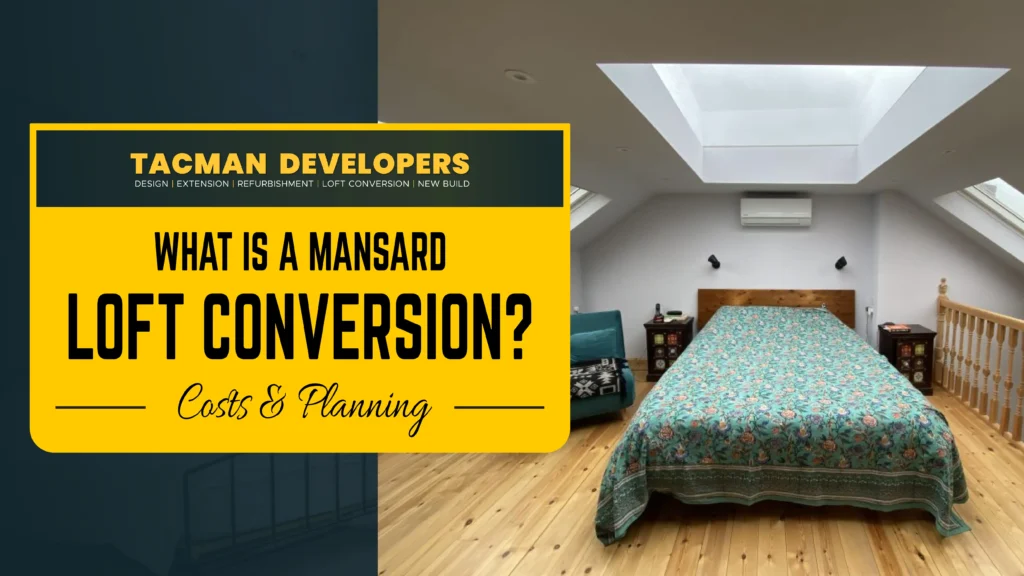
Mansard Loft Conversion
Another popular option is the mansard loft conversion, which is frequently seen in London terraces. This type of conversion alters the structure of the roof to create a near-vertical wall with a flat roof on top, significantly increasing the usable floor area inside the loft. Because of the structural changes involved, mansard conversions usually require planning permission, but they provide one of the largest and most practical loft spaces.
-
Rooflight Conversion
A rooflight loft conversion is the least intrusive option and involves minimal structural changes. Instead of extending the roof, rooflights or skylights are installed directly into the existing roof slope to bring natural light into the attic space. This type of conversion works best when the property already has sufficient roof height and when homeowners want a simpler, more cost-effective solution.
Victorian Terrace Loft Conversion
Victorian terraces are among the most frequently converted homes in London. Because neighbouring houses often already have conversions, planning approval is usually straightforward.
Benefits of converting a Victorian terrace loft
-
Consistent roofline with neighbouring properties
-
Proven planning approval patterns
-
Good structural support
Typical uses
-
Master bedroom with en-suite
-
Home office
-
Guest bedroom
Edwardian House Loft Conversion
Edwardian homes offer larger roof spaces than many Victorian terraces. Loft conversions in Edwardian houses often provide generous layouts suitable for full bedroom suites.
Edwardian homes were built slightly later than Victorian houses and often include wider hallways and larger rooms.
Advantages of Edwardian loft conversions
-
Wider properties
-
Larger roof volumes
-
More flexible floor plans
Popular design layouts
-
Bedroom with ensuite
-
Bedroom + study area
-
Two small bedrooms
Edwardian conversions often allow for larger dormer structures because of the wider footprint of the house.
1930s Semi Loft Conversion
A 1930s semi-loft conversion often requires a hip-to-gable extension because these houses typically have sloping roofs on the side. This design increases headroom and usable floor space.
1930s semi-detached homes are common across Greater London suburbs.
Structural characteristics
-
Hipped roofs
-
Brick construction
-
Large rear gardens
-
Semi-detached layout
Types of lofts possible for a 1930s semi loft conversion
The types of lofts possible for a 1930s semi loft conversion usually depend on the roof shape and the amount of space homeowners want to create.
-
Hip-to-Gable Conversion
One common option is a hip-to-gable conversion, which extends the sloped side of the roof to form a vertical wall. This structural change increases the overall internal volume of the loft and creates significantly more usable floor space.
-
Dormer Conversion
Another option is a dormer conversion, which is typically built at the rear of the property. A dormer extends outward from the existing roof slope and provides additional headroom while allowing more natural light to enter the loft through larger windows.
-
Combination Hip-to-Gable + Dormer
Many homeowners choose a combination of a hip-to-gable and dormer conversion, as it is often the most effective way to maximise available space in a 1930s semi-detached house. This approach expands the roof structure and adds a dormer extension, creating a larger and more practical living area in the loft.
Loft Conversion on a 1930s Semi-Detached Property
A loft conversion on a 1930s semi-detached property is one of the most common renovation projects in suburban London.
These conversions typically create:
-
One large bedroom
-
Ensuite bathroom
-
Built-in storage areas
Because of the roof shape, many projects require structural reinforcement and steel beams.
Cost of Victorian Loft Conversion London
The cost of a Victorian loft conversion in London typically ranges from £45,000 to £85,000 for standard, mid, and premium specifications, ranging from roughly £45,000 to £66,000. It depends on design type, structural changes, and interior finishes.
Typical London loft conversion costs
| Conversion Type | Average Cost |
|---|---|
| Rooflight Conversion | £35,000–£50,000 |
| Dormer Conversion | £45,000–£70,000 |
| Hip-to-Gable | £55,000–£75,000 |
| Mansard Conversion | £70,000–£90,000+ |
Factors affecting cost
-
Structural reinforcement
-
Planning permission requirements
-
Bathroom installation
-
Roof insulation
-
Staircase design
-
Labour costs in London
Planning Permission for Loft Conversions in London
Many loft conversions in London fall under permitted development rights, meaning planning permission may not be required. However, mansard conversions and properties in conservation areas usually require approval.
When planning permission is required
-
Mansard roof conversion
-
Property located in a conservation area
-
Large dormer structures
-
Structural changes affecting roof height
Building regulations always apply
Regardless of planning permission, all loft conversions must comply with:
-
Structural safety
-
Fire safety regulations
-
Insulation requirements
-
Staircase access standards
For official guidance, homeowners can refer to the UK government planning portal.
Design Considerations for Period Property Loft Conversions
Period homes require careful design to preserve architectural character.
Important considerations
1. Maintaining original features
-
Preserve chimney structures where possible
-
Use materials matching existing brickwork
2. Natural lighting
-
Roof windows
-
Dormer windows
-
Skylights
3. Staircase placement
A staircase must integrate naturally with the existing floor layout.
4. Head height
Most loft conversions require a minimum height of 2.2m.
Common Mistakes Homeowners Make
- Unexpected structural work can increase budgets.
- London conservation areas often have stricter requirements.
- A badly placed staircase can reduce usable space.
- Experience with period properties is essential.
Choosing the Right Loft Conversion Specialist in London
A successful loft conversion in a period property depends heavily on working with professionals who understand the structural and architectural challenges of older homes. Victorian, Edwardian, and 1930s houses often require careful planning, structural expertise, and design sensitivity to maintain the character of the property while creating modern living space.
When choosing a loft conversion specialist in London, homeowners should look for contractors with proven experience in period property conversions, a strong track record of planning approvals, and a portfolio of completed loft projects similar to their own property type. It is also important to work with a team that understands structural engineering requirements, building regulations, and the complexities of working within existing roof structures.
Homeowners who are planning a loft conversion and want expert guidance can explore professional loft conversion services in London offered by Tacman. Their team specialises in designing and delivering high-quality loft conversions tailored to different types of London homes, including Victorian terraces, Edwardian houses, and 1930s semi-detached properties.
FAQs
1) Can you do a loft conversion in a period property in London?
Yes. Most Victorian, Edwardian, and 1930s homes can support a loft conversion with the right structural design.
2) What is the best loft conversion for a Victorian terrace?
A rear dormer suits most Victorian terraces because it adds headroom and usable floor space efficiently.
3) What is a mansard loft conversion and why is it popular in London?
A mansard reshapes the roof for maximum space, which suits London terraces, but it usually needs planning permission.
4) How much does a Victorian loft conversion cost in London?
Most Victorian loft conversions in London cost £45,000–£85,000, depending on design and finishes.
5) How much does a loft conversion cost for a Victorian terrace?
A typical Victorian terrace dormer conversion often sits around £50,000–£75,000 in London.
6) What is the best loft conversion for a 1930s semi?
A hip-to-gable with a rear dormer is the most common setup because it creates the most usable space.
7) Do loft conversions need planning permission in London?
Many fall under permitted development, but mansards and conservation areas often require planning permission.
8) How long does a loft conversion take in a period home?
Most builds take 6–10 weeks, depending on complexity and approvals.
9) What ceiling height do you need for a loft conversion?
You usually need around 2.2m from floor to ridge to convert comfortably.
10) Will a loft conversion add value to a London period property?
Yes. Adding a bedroom (especially with an ensuite) often boosts value because space is at a premium in London.
11) What are common problems with loft conversions in period properties?
Low head height, tricky stair placement, chimney stacks, and stricter planning rules in conservation areas.
12) Who provides loft conversion services in London for period homes?
Specialists with proven period-property experience, Tacman offers London loft conversion services.