A bungalow loft conversion transforms your unused roof space into a fully livable room, such as a bedroom, bathroom, or home office. In the UK, costs typically range from £30,000 to £80,000+, depending on conversion type, size, and location. Most bungalow loft conversions do not require planning permission under Permitted Development Rights, making them one of the most cost-effective ways to add space and value to your home.
Most bungalow owners walk past their loft hatch every single day without giving it a second thought. But that unused space above your ceiling? It could be your next bedroom, a home office, a guest suite, or even a rental income opportunity.
Bungalows are uniquely positioned for loft conversions. Unlike terraced or semi-detached houses, a bungalow’s entire upper floor is untouched, giving you far more raw space to work with. In many cases, a well-executed bungalow loft conversion can add up to 20–25% to your property’s value, according to Nationwide Building Society data.
Whether you’re a first-time homeowner looking to grow your living space, a property investor eyeing added value, or a professional seeking a dedicated workspace at home, this guide covers everything you need. We’ll walk you through real UK costs, planning rules, the best conversion styles for bungalows, and what to watch out for before you break ground.
What Is a Bungalow Loft Conversion?
A bungalow loft conversion involves converting the unused roof space of a single-storey bungalow into habitable living space. Because bungalows have no upper floor, the entire loft is available for conversion, often resulting in larger, more flexible rooms than typical house loft conversions. It’s a popular choice across the UK for adding bedrooms, bathrooms, or offices without extending outward.
A bungalow is a single-storey property, which means its loft is entirely free; there are no bedrooms above to constrain the space or complicate the structural work. This makes bungalow loft conversions particularly attractive because you’re effectively building a brand-new floor on top of an existing structure.
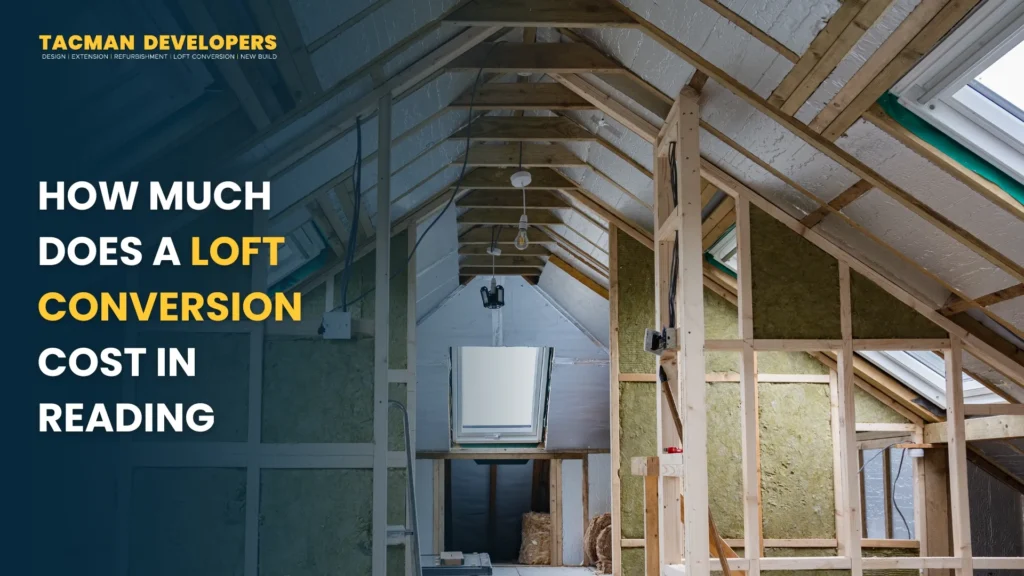
The conversion process involves reinforcing the floor joists, installing a staircase, adding dormer windows or roof lights for natural light, and insulating and finishing the space to building regulations standards.
How Is It Different From a Standard Loft Conversion?
In a typical two-storey house, the loft sits above existing bedrooms, limiting headroom and usable floor area. A bungalow, by contrast, often has a larger roof pitch and significantly more cubic space, meaning the potential footprint of your new room is considerably greater.
This also means the staircase positioning requires more planning, since you’re going from ground floor directly to loft level with no intermediate landing.
Is a Bungalow Loft Conversion Feasible? Key Checks Before You Begin
Before starting a bungalow loft conversion in the UK, check three things: head height (you need at least 2.2 metres from floor to ridge), roof structure type (cut rafter roofs convert more easily than trussed roofs), and whether your loft meets building regulations. A structural engineer or specialist conversion company can assess feasibility quickly during an initial survey.
Not every bungalow loft is automatically convertible. Here’s what determines feasibility:
1. Head Height
The most critical factor. You need a minimum of 2.2 metres from the existing ceiling joists to the apex of the roof. Anything below this makes habitable conversion very difficult without raising the roof structure, which adds cost and usually requires planning permission.
2. Roof Structure Type
- Cut rafter (traditional) roofs : These use individual rafters and are much easier to convert. The space is open and clear.
- Trussed roofs : Common in post-1960s bungalows, these use a web of diagonal timbers that fill the loft space. They can still be converted but require structural alterations, which adds time and cost.
3. Staircase Access
Going from ground floor to loft in a single run requires approximately 3 metres of horizontal space for a compliant staircase. In smaller bungalows, this can be a design challenge, but experienced architects and lost conversion specialists regularly find creative solutions.
4. Building Regulations
All loft conversions in the UK must comply with Building Regulations, regardless of whether planning permission is required. This covers fire safety, insulation, structural integrity, ventilation, and staircase dimensions.
For official guidance on structural requirements and compliance, homeowners can refer to the Planning Portal UK, which provides detailed information on loft conversions and permitted development rights.
Types of Bungalow Loft Conversion
The most popular types of bungalow loft conversion in the UK are dormer conversions, hip-to-gable conversions, and Velux (roof light) conversions. Dormer conversions offer the most usable space by extending vertically from the roof slope. Hip-to-gable conversions are ideal for semi-detached bungalows. Velux conversions are the most affordable but work best when the existing head height is sufficient.
Dormer Loft Conversion
The most popular choice for bungalows. A dormer extends vertically outward from the existing roof slope, creating a box-shaped structure with a flat or low-pitched roof. This dramatically increases usable floor space and headroom.
- Pros: Maximum space, full-height walls, suitable for bedrooms and bathrooms
- Cons: Changes the roofline appearance; may require planning permission depending on size
Velux / Roof Light Conversion
The simplest and most budget-friendly option. Velux windows are installed into the existing roof slope without altering the roof structure.
- Pros: Lowest cost, usually falls within Permitted Development, minimal disruption
- Cons: Limited headroom unless existing ridge height is generous; no extension of floor space
Hip-to-Gable Conversion
Ideal for detached or semi-detached bungalows with a hipped roof. The sloping hip end of the roof is extended outward to create a vertical gable wall, significantly increasing loft volume.
- Pros: Excellent space gain, suits many bungalow styles
- Cons: More structural work involved; planning permission often required
Mansard Conversion
A more substantial alteration where one or both roof slopes are replaced with near-vertical walls and a flat roof. Less common in bungalows but used when maximum space is the priority.
- Pros: Largest possible space, full-floor feel
- Cons: Most expensive, almost always requires planning permission
Best Bungalow Loft Conversion Ideas
Popular ideas include adding extra bedrooms, home offices, en-suite bathrooms, and open-plan living areas to maximise functionality.
Design plays a crucial role in the success of a loft conversion. The best ideas focus on making the most of available space while maintaining comfort and practicality.
Many homeowners choose to create an additional bedroom with an en-suite bathroom, which is particularly valuable for growing families or guests. Others opt for home offices, especially with the rise of remote working.
For larger loft spaces, open-plan designs can create a modern and flexible living area. Incorporating skylights or dormer windows enhances natural light, making the space feel bright and inviting.
If you’re planning a broader renovation, combining your loft conversion with home refurbishment services can further improve your property’s overall functionality and value.
Costs of Bungalow Loft Conversions in the UK
In the UK, bungalow loft conversion costs range from approximately £22,000 for a basic Velux conversion to £90,000 or more for a full mansard or complex dormer. The average mid-range project, a dormer conversion with a bedroom and en suite, typically costs £45,000 to £60,000. Costs vary by region, with London projects often running 20–30% higher than the national average.
Cost Breakdown by Conversion Type
| Project Type | Estimated Cost |
| Basic Velux Conversion | £22,500 – £45,000 |
| Dormer Conversion | £30,000 – £90,000 |
| Mansard Conversion | £45,000 – £80,000+ |
Costs can vary significantly depending on location, with London projects generally being more expensive due to higher labour and material costs.
Investing in quality materials and experienced professionals ensures long-term durability and compliance with UK standards. Working with experts in new build and structural development can also help streamline complex projects.
What Drives the Cost Up?
Several factors push bungalow loft conversion costs higher than average:
- Trussed roof structure: Requires structural alterations before conversion can begin
- En suite bathroom: Adds plumbing, drainage, and tiling costs (typically
- Staircase complexity: A bespoke or space-saving staircase can cost £3,000–£8,000
- London and South East location: Labour costs are significantly higher
- Heritage or conservation areas: Additional planning constraints apply
- Insulation specification: High-performance insulation for energy efficiency adds cost but reduces bills long-term
Planning Permission for Bungalow Loft Conversions
Most bungalow loft conversions in the UK do not require planning permission, as they fall under Permitted Development Rights. However, planning permission is needed if you live in a conservation area, a listed building, or if your conversion extends beyond specific size limits. Always check with your local planning authority or a specialist before proceeding.
Permitted Development Rights
Under the UK’s Permitted Development Rights, many loft conversions can proceed without a formal planning application, provided they meet certain criteria:
- The additional roof space created does not exceed 40 cubic metres for terraced houses or 50 cubic metres for detached and semi-detached homes
- No extension beyond the existing roof slope on the principal elevation (the front of the house)
- No raised platform, balcony, or verandah
- Materials must be similar in appearance to the existing house
Important for bungalows: Because a bungalow has no existing upper storey, some local planning authorities may apply stricter scrutiny to larger conversions. Always confirm with your Local Planning Authority (LPA) before assuming Permitted Development applies.
When You Will Need Planning Permission
- Your property is in a conservation area or is a listed building
- The conversion significantly alters the roofline
- You’re adding a balcony or elevated terrace
- Your local authority has removed Permitted Development Rights (an Article 4 Direction is in place)
- The extension exceeds the volume limits
Certificate of Lawful Development
Even when planning permission isn’t required, it’s strongly recommended to apply for a Certificate of Lawful Development (CLD). This protects you legally and provides documentation for future property sales.
Bungalow Loft Conversion Ideas & Design Inspiration
Popular bungalow loft conversion ideas in the UK include creating a master bedroom with en suite, a home office, a guest bedroom, a playroom, or a rental studio. Because bungalow lofts tend to be larger than those in two-storey homes, they can comfortably accommodate open-plan layouts or even multiple rooms, making them extremely versatile.
Master Bedroom with En Suite
The most popular choice, and for good reason. A bungalow loft conversion gives you the space for a generous double bedroom, a walk-in wardrobe, and a private bathroom, all without impacting your ground floor layout. Velux windows or a rear dormer flood the space with natural light.
Home Office or Studio
With remote working now a permanent reality for many UK professionals, a dedicated loft office offers the separation from home life that a spare bedroom simply can’t match. Add good insulation, ethernet cabling, and skylights for a productive, inspiring workspace.
Guest Bedroom or Annexe
Perfect for families who regularly host visitors or have elderly relatives who need accessible but private accommodation. A self-contained loft suite with its own bathroom adds enormous practical value.
Children’s Playroom or Teen Retreat
Free up your ground-floor living spaces by giving children a dedicated space of their own. The slightly quirky roofline angles typical of loft rooms can actually add charm and character for younger occupants.
Rental Income Opportunity
In cities like London, a well-converted bungalow loft with a separate entrance can command significant rental income. Investors should note that this use may require planning permission and must comply with Houses in Multiple Occupation (HMO) regulations if applicable.
How Much Value Does a Bungalow Loft Conversion Add?
A bungalow loft conversion is one of the highest-return home improvements available in the UK. According to research by Nationwide Building Society, a loft conversion can add between 15% and 25% to a property’s market value, and in high-demand areas like London, that uplift can be even more significant.
Building Regulations for Bungalow Loft Conversions
Regardless of whether planning permission is required, all loft conversions in England and Wales must comply with Building Regulations. These are enforced by your local authority’s Building Control department or an approved private inspector.
Key Areas Covered
Structural Integrity
Floor joists must be upgraded to support the weight of the new room and its occupants. A structural engineer will specify the required joist sizes and any steel beam installations.
Fire Safety
- A protected staircase with fire-resistant construction must link all floors
- Mains-wired, interlinked smoke alarms are required on each floor
- Self-closing fire doors on rooms leading to the stairwell
- Emergency escape windows (at least 0.33m²) in habitable rooms
Insulation & Energy Efficiency
Loft conversions must meet minimum thermal performance standards under Part L of Building Regulations. This typically means 100–150mm of rigid insulation between and below rafters.
Ventilation
Both background ventilation (trickle vents) and purge ventilation (openable windows) are required in habitable rooms.
Staircase Dimensions
Minimum requirements include:
- Going (step depth): at least 220mm
- Rise (step height): no more than 220mm
- Headroom: minimum 1.9m (2m preferred)
The Bungalow Loft Conversion Process: Step by Step
Step 1: Initial Assessment
Hire a specialist or structural engineer to assess your loft’s feasibility, head height, roof structure, and access options.
Step 2: Design & Drawings
An architect or architectural technologist produces drawings for planning (if required) and building regulations purposes.
Step 3: Planning Application (if needed)
Submit to your Local Planning Authority. Decisions typically take 8 weeks for householder applications.
Step 4: Building Regulations Application
Submit a full plans application to Building Control before work begins. This ensures the design is approved before construction starts.
Step 5: Find a Reputable Contractor
Obtain at least three quotes. Ensure your contractor is experienced in loft conversions specifically, not just general builders. Look for members of the Federation of Master Builders (FMB) or TrustMark-registered tradespeople.
Step 6: Construction
A typical bungalow loft conversion takes 8–14 weeks depending on complexity. Key stages: structural alterations, roofing works, staircase installation, first and second fix, plastering, and finishing.
Step 7: Building Control Sign-Off
On completion, your Building Control inspector issues a Completion Certificate, an essential document for your records and future property sales.
Common Challenges & How to Overcome Them
Challenges include low headroom, structural limitations, and planning restrictions, which can be resolved through smart design and expert planning.
Loft conversions in bungalows can present unique challenges. Low roof height is one of the most common issues, which may require raising the roof or opting for a dormer design.
Structural limitations can also affect feasibility, particularly in older properties. However, these challenges can often be addressed with proper engineering solutions and professional guidance.
Why Choose Tacman Developers for Your Bungalow Loft Conversion?
At Tacman Developers, we specialise in design-led, regulation-compliant home transformation projects across the UK. Our experienced team handles everything from initial feasibility assessments and architectural drawings through to structural work, fit-out, and building control sign-off.
We understand that a bungalow loft conversion is one of the biggest investments you’ll make in your home, and we treat it that way. Every project is managed with transparency, clear communication, and a commitment to delivering spaces that genuinely improve how you live.
Conclusion
A bungalow loft conversion is one of the most effective ways to maximise space, enhance functionality, and increase property value in the UK. By transforming unused roof space into a practical living area, homeowners can enjoy the benefits of a larger home without the need to relocate.
While the process involves careful planning, design, and compliance with regulations, the long-term benefits make it a worthwhile investment. With the right approach and expert support, a loft conversion can completely transform your property and lifestyle.
FAQs
Is a bungalow loft conversion worth it?
Yes, it adds valuable living space and can significantly increase property value.
Do I need planning permission?
Not always, but building regulations approval is required in all cases.
How long does a loft conversion take?
Most projects take between 6 and 12 weeks, depending on complexity.
Can all bungalows be converted?
Most can, but feasibility depends on roof height and structure.
Is it cheaper than moving house?
Yes, in most cases it is more cost-effective than buying a larger property.