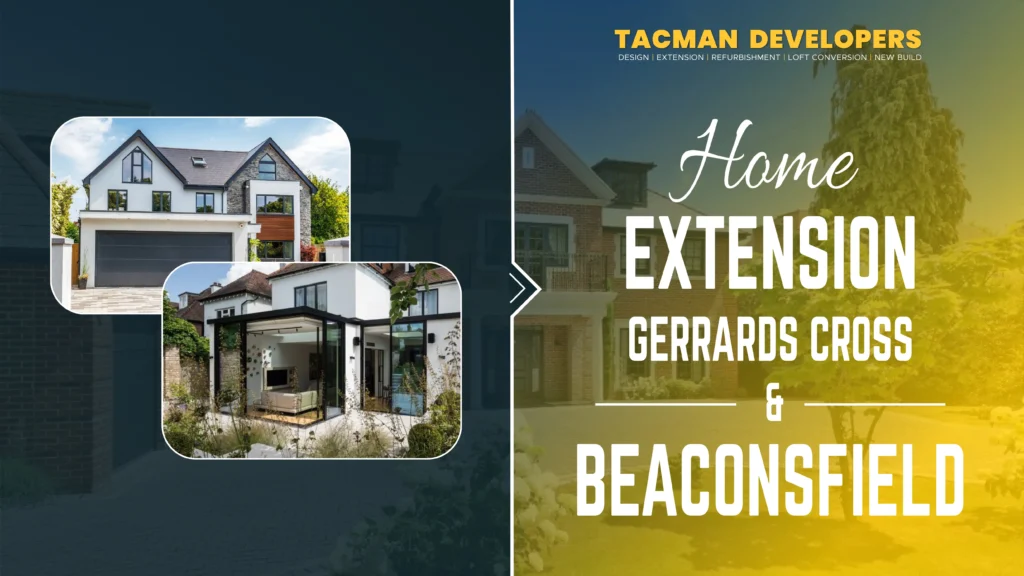
Looking for a luxury home extension in Gerrards Cross or Beaconsfield? A professionally designed home extension can add valuable living space, enhance your property’s appearance, and increase its market value. Whether you’re planning a rear extension, side return, wraparound extension, or a bespoke glass extension, working with an experienced design and build specialist ensures your project complies with planning regulations while delivering exceptional quality.
If you’re searching for a home extension in Gerrards Cross, you’re likely looking for more than just extra space. Homeowners in Gerrards Cross, Beaconsfield, and the surrounding Buckinghamshire villages often invest in high-quality extensions to create luxurious kitchens, larger family rooms, dedicated home offices, or open-plan living areas that better suit modern lifestyles.
Rather than moving house, many families are choosing to improve their existing properties. With rising property prices, moving costs, and limited availability of premium homes, extending an existing property has become an increasingly attractive long-term investment. A thoughtfully designed extension allows you to remain in a location you love while adapting your home to meet changing family or lifestyle needs.
Gerrards Cross and Beaconsfield are well known for their spacious detached and semi-detached homes, generous plot sizes, and desirable residential neighbourhoods. These characteristics create excellent opportunities for bespoke home extensions, but they also demand careful architectural planning to ensure new additions complement the property’s original character.
Why Homeowners in Gerrards Cross & Beaconsfield Choose Home Extensions
Many homeowners in Gerrards Cross and Beaconsfield choose home extensions to gain additional living space, improve modern family living, and increase property value without the expense and disruption of moving. With generous plot sizes and high-value homes, extending often provides a better long-term investment than relocating.
Because demand for homes in these locations remains strong, moving to a larger property can be both expensive and challenging. Stamp Duty, legal fees, estate agent commissions, and removal costs quickly add up, making a home extension a practical alternative for many homeowners.
A well-designed extension allows you to customise your property around your lifestyle rather than compromising on another home. Whether you need a larger kitchen, an additional reception room, a home gym, or space for multi-generational living, extending your existing property often provides greater flexibility while preserving the home’s unique character.
Many homeowners also see extensions as a long-term investment. Improvements that increase usable living space can enhance both everyday comfort and future market appeal when designed to a high standard.
If you’re still exploring which type of extension best suits your property, Tacman Developers’ guide on which home extension suits your house best explains how different extension styles work for different property types.
Extension Styles Suited to Gerrards Cross Detached Properties
Detached properties in Gerrards Cross and Beaconsfield are ideal for a wide range of luxury home extensions, including rear extensions, wraparound extensions, side extensions, kitchen extensions, glass extensions, and double-storey additions. The generous plot sizes found in many SL9 and HP9 homes provide excellent opportunities for bespoke architectural designs.
Unlike smaller urban properties with limited outdoor space, many homes in the area have wider plots, larger gardens, and spacious side access. This allows architects greater freedom to design extensions that improve both appearance and functionality without compromising the balance of the existing home.
Rear Home Extensions
Rear extensions remain one of the most popular choices for homeowners who want to create open-plan living spaces.
They are particularly effective for:
- Expanding kitchens.
- Creating kitchen-dining-family rooms.
- Improving connections with the garden.
- Adding natural light through large glazing systems.
Many luxury homes now incorporate sliding or slimline aluminium doors, roof lanterns, and vaulted ceilings to create bright, contemporary living environments.
For inspiration, explore Tacman Developers’ guide to kitchen extension ideas for modern UK homes, which showcases layouts, design features, and practical planning ideas.
Side Extensions
Many detached homes in Gerrards Cross have generous space to the side of the property.
A side extension can provide:
- Utility rooms.
- Home offices.
- Larger kitchens.
- Additional reception rooms.
- Ground-floor guest accommodation.
When carefully designed, side extensions integrate seamlessly with the existing property while preserving the home’s architectural proportions.
Wraparound Extensions
Wraparound extensions combine side and rear extensions to create expansive open-plan layouts. These extensions are particularly popular among families seeking:
- Large entertaining spaces.
- Multi-functional living areas.
- Improved garden access.
- Contemporary family kitchens.
Because they significantly alter the ground floor, wraparound extensions require careful architectural planning to ensure the new spaces flow naturally with the original property.
Double-Storey Extensions
For homeowners requiring substantially more accommodation, double-storey extensions provide excellent value.
They can create:
- Additional bedrooms.
- En-suite bathrooms.
- Larger kitchens below.
- Expanded family living areas.
- Home offices.
Compared with building two separate single-storey extensions over time, constructing both floors together can often provide greater long-term efficiency.
Roof Extensions
Where site constraints limit outward expansion, roof extensions may offer another way to create valuable living space.
Depending on the property’s roof design, options include:
- Hip-to-gable conversions.
- Dormer extensions.
- Roof enlargements.
- Loft conversions.
Tacman Developers’ guide to the best roof extension types for modern UK homes explains which solutions are most appropriate for different roof structures.
Designing Luxury Extensions That Complement Existing Architecture
The most successful luxury extensions respect the original character of the property while introducing modern features such as open-plan layouts, premium glazing, natural materials, and energy-efficient construction.
One of the defining characteristics of Gerrards Cross and Beaconsfield is the quality of their residential architecture. From elegant Georgian-inspired homes to contemporary detached properties, the area features a diverse range of high-value housing. Rather than competing with the existing building, a well-designed extension should enhance it.
Architects often achieve this by carefully matching brickwork, roof materials, window proportions, and external detailing while introducing subtle contemporary elements that improve functionality.
For homeowners considering a premium architectural project, Tacman Developers’ article on luxury home extension builders in the UK explores how bespoke design and quality craftsmanship combine to deliver exceptional results.
Why Professional Design Matters
Professional architectural design ensures your extension complements the existing property, complies with planning requirements, and maximises both functionality and long-term property value.
Luxury home extensions require far more than construction expertise. Successful projects begin with careful design that considers:
- Existing architecture.
- Site orientation.
- Natural light.
- Structural feasibility.
- Building Regulations.
- Energy efficiency.
- Future resale appeal.
An experienced design-and-build company coordinates architects, structural engineers, planning consultants, and construction teams from the outset, helping homeowners avoid costly design changes later in the project.
At Tacman Developers, every extension is designed around the client’s lifestyle, ensuring the finished space feels integrated rather than simply added on. We also follow recognised industry guidance and current UK Building Regulations to help ensure every project meets the highest standards of safety, quality, and energy efficiency.
How Much Does a High-Spec Home Extension Cost in SL9 & HP9 in 2026?
A high-spec home extension in Gerrards Cross or Beaconsfield typically costs between £2,800 and £4,500+ per m² in 2026, depending on the extension type, specification, structural complexity, and finish. Premium glazing, bespoke joinery, smart home technology, and luxury materials can increase the overall project budget.
One of the first questions homeowners ask is, “How much will my extension cost?” While it’s understandable to look for a simple figure, the reality is that every project is unique. The final investment depends on factors such as the size of the extension, the property’s existing structure, ground conditions, planning requirements, and the level of finish you choose.
Homes in Gerrards Cross (SL9) and Beaconsfield (HP9) are generally larger than the UK average and often feature premium architectural styles. As a result, many homeowners opt for high-end finishes that complement the character and value of their properties. This means extension projects in these areas are often more bespoke than standard residential builds.
If you’re comparing costs across nearby areas, Tacman Developers’ guide to home extension costs in Windsor & Maidenhead provides additional insights into regional pricing and the factors that influence project budgets.
Typical Home Extension Costs in Gerrards Cross & Beaconsfield
The figures below are indicative only and should be used as a general guide. Actual costs vary depending on site conditions, structural requirements, specification, and professional fees.
| Extension Type | Typical Cost (2026) |
| Single-Storey Rear Extension | £70,000 – £140,000+ |
| Side Extension | £65,000 – £130,000+ |
| Wraparound Extension | £110,000 – £220,000+ |
| Double-Storey Extension | £140,000 – £300,000+ |
| Glass Extension / Orangery | £90,000 – £200,000+ |
| Luxury Kitchen Extension | £100,000 – £250,000+ |
These budgets generally include structural construction but may exclude specialist features such as bespoke kitchens, premium landscaping, luxury lighting, or high-end interior furnishings.
What Factors Affect the Cost of a Home Extension?
The cost of a home extension depends on several factors, including the size of the project, structural complexity, materials, glazing, interior finishes, site conditions, and planning requirements. Premium specifications naturally result in higher overall costs.
Some of the biggest cost factors include:
Extension Size
Larger extensions require more materials, labour, structural steel, and finishing work. However, the cost per square metre may reduce slightly as projects increase in size due to economies of scale.
Structural Complexity
Removing load-bearing walls, installing large steel beams, creating open-plan layouts, or working around existing structures all add complexity to a project.
Ground Conditions
Every site is different. Soil conditions, existing drainage, nearby trees, and foundation requirements can all influence construction costs.
Glazing and Doors
One of the defining features of modern luxury extensions is expansive glazing. Slimline aluminium sliding doors, structural glazing, roof lanterns, and bespoke glass panels can significantly enhance natural light but also increase the project budget.
Interior Specification
High-quality kitchens, natural stone worktops, engineered timber flooring, bespoke cabinetry, underfloor heating, and smart home systems all contribute to the final cost.
Professional Fees
Architectural drawings, structural engineering, planning applications, Building Regulations compliance, and specialist surveys should all be included when preparing a realistic project budget.
Planning with Buckinghamshire Council and Conservation Areas
Many home extensions in Gerrards Cross and Beaconsfield can be completed under Permitted Development Rights, but larger projects, homes in conservation areas, listed buildings, or developments that exceed permitted limits may require planning permission from Buckinghamshire Council.
Planning is one of the most important stages of any extension project. Understanding the local planning framework from the beginning helps reduce delays and ensures your design complies with current regulations.
Buckinghamshire Council is the local planning authority responsible for determining planning applications within Gerrards Cross, Beaconsfield, Chalfont St Peter, Chalfont St Giles, Denham, and the surrounding areas.
Why Design-Led Planning Delivers Better Results
A design-led approach ensures your extension is planned around your lifestyle, the property’s architecture, and local planning policies rather than simply adding extra floor space.
The most successful luxury extensions begin long before construction starts.
Careful design considers:
- How the family uses the home.
- Natural light throughout the day.
- Garden connections.
- Internal circulation.
- Structural efficiency.
- Future adaptability.
- Energy performance.
This holistic approach often results in spaces that feel brighter, larger, and more practical than extensions designed solely around increasing floor area.
Glass Extensions, Orangeries & Premium Finishes
Glass extensions and bespoke orangeries are among the most sought-after home improvements in Gerrards Cross and Beaconsfield. They maximise natural light, create seamless connections with the garden, and deliver elegant, contemporary living spaces while complementing the character of high-value homes.
Luxury homeowners increasingly want spaces that feel open, bright, and connected to the outdoors. Rather than simply adding extra floor space, many extensions are now designed to transform the way a home is experienced every day.
Glass extensions and modern orangeries achieve this beautifully. By combining large glazed panels, slimline aluminium doors, roof lanterns, and carefully selected materials, these extensions create impressive living environments that feel spacious throughout every season.
Whether you’re entertaining guests, working from home, or spending time with family, the additional natural light and uninterrupted garden views can dramatically improve both comfort and wellbeing.
Conclusion
A luxury home extension in Gerrards Cross is more than simply adding extra square metres—it’s an investment in the way you live. Whether you’re creating an open-plan kitchen, expanding your family living space, or designing a bespoke glass extension, a carefully planned project can enhance both your home’s functionality and its long-term value.
The most successful extensions combine thoughtful architectural design, premium materials, and expert construction with a clear understanding of local planning requirements. By working with an experienced design-and-build company, you can create a seamless addition that complements your property’s character while meeting your family’s needs for years to come.
At Tacman Developers, we’re committed to delivering high-quality home extensions that reflect the unique style of every property we work on. From the initial consultation through to planning, construction, and final completion, our experienced team provides a professional, transparent service focused on exceptional results.
Ready to Extend Your Home?
If you’re considering a home extension in Gerrards Cross, Beaconsfield, or the surrounding Buckinghamshire area, we’d be delighted to discuss your ideas.
Contact Tacman Developers today for a free consultation and discover how we can transform your home with a beautifully designed luxury extension.
Frequently Asked Questions
What is the average cost of a home extension in Gerrards Cross?
Most premium home extensions in Gerrards Cross range from £70,000 to £250,000+, depending on size, specification, and structural complexity.
Do I need planning permission for a home extension?
Not always. Some extensions fall under Permitted Development Rights, while larger or more complex projects require planning permission from Buckinghamshire Council.
How long does a home extension take?
Most extensions take between 3 and 8 months, depending on the size of the project, planning approvals, and site conditions.
Will a home extension increase my property’s value?
A well-designed extension can significantly improve living space and may increase your property’s market value, particularly in high-demand areas such as Gerrards Cross and Beaconsfield.
Which extension adds the most value?
Kitchen extensions, rear extensions, loft conversions, and double-storey extensions often provide the strongest long-term return on investment.
Can you match the existing style of my home?
Yes. We carefully select materials, rooflines, brickwork, and architectural details so the extension complements the original property.