
When planning a full home renovation or property upgrade in London, one of the biggest design decisions is choosing the right type of kitchen. The choice between a custom kitchen and a modular kitchen doesn’t just influence how your kitchen looks; it determines how efficiently the space works, how long it lasts, and how much value it adds to your home.
In today’s UK property market, the kitchen remains one of the highest-value investments a homeowner can make. According to recent surveys, a well-designed kitchen can increase a property’s value by up to 10%, especially in sought-after areas such as Kensington, Wandsworth, and Richmond. With that level of impact, the decision between a bespoke, tailor-made kitchen and a ready-to-install modular system becomes more than just a design preference; it’s a strategic investment.
Custom kitchens are built entirely around your specific space and lifestyle needs. They offer unparalleled flexibility, premium materials, and craftsmanship that stand the test of time. In contrast, modular kitchens are made from pre-manufactured units designed for efficiency, standardisation, and faster installation. Both have unique advantages depending on your budget, timeline, and property type.
This comprehensive guide breaks down everything London homeowners need to know, from design flexibility and installation timelines to kitchen fitting costs and building regulations. Whether you’re updating a compact flat in Shoreditch or redesigning a large open-plan space in Wimbledon, understanding the difference between custom and modular kitchens will help you make an informed, future-proof decision.
What Is a Custom Kitchen?
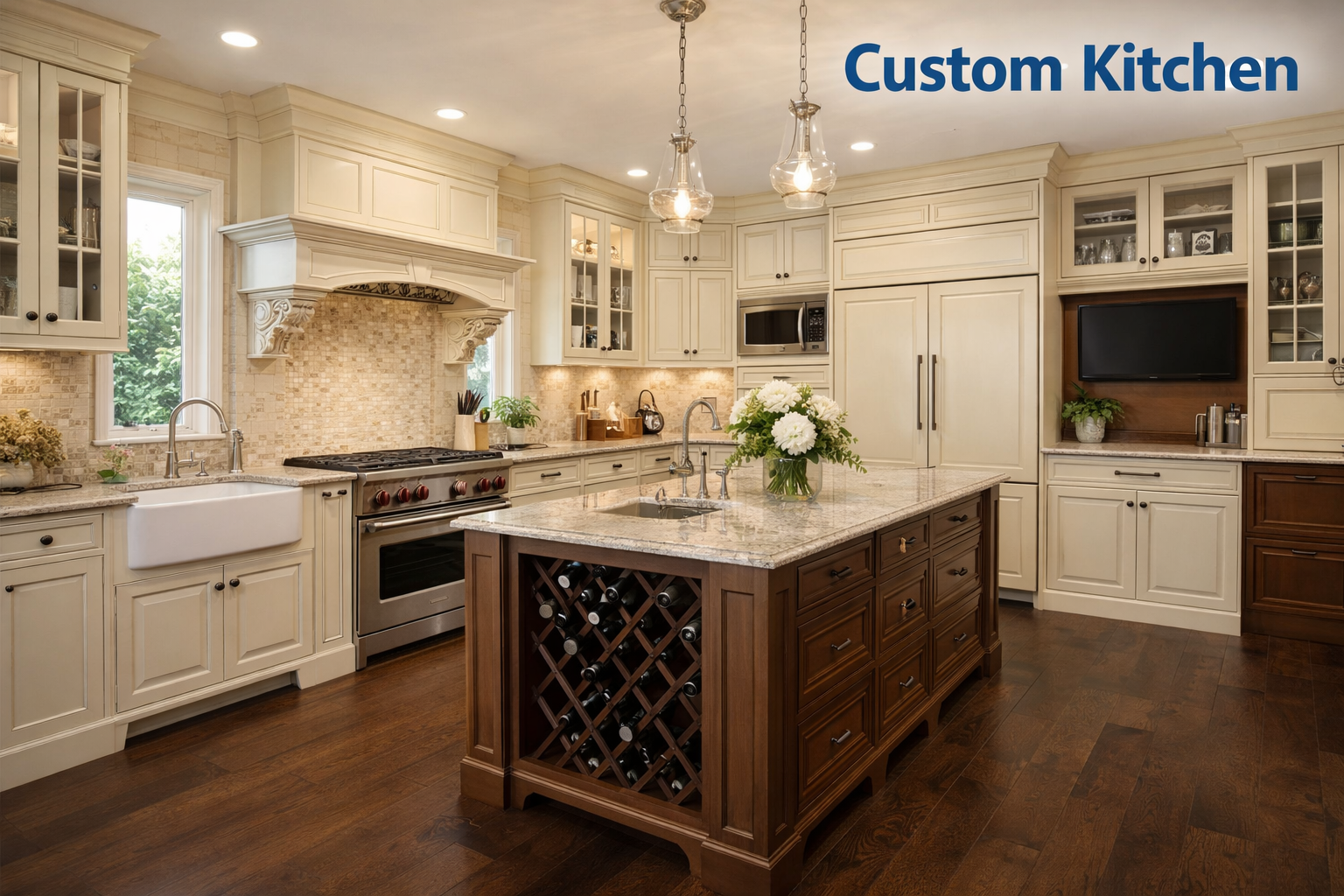
A custom kitchen represents the ultimate in personalised design and craftsmanship. Every element from cabinet dimensions to materials and finishes is tailored to your specific space. Unlike standardised options, a custom kitchen is measured, designed, and hand-built to meet your home’s exact requirements.
Bespoke Design and Manufacturing
Custom kitchens are designed from scratch to suit your layout. In London’s period homes, where alcoves, chimney breasts, and sloped ceilings are common, bespoke cabinetry ensures that no space is wasted. Skilled cabinetmakers build each unit individually, guaranteeing a perfect fit and exceptional durability.
Premium Materials
With a custom kitchen, you have access to high-end materials such as solid hardwoods (oak, walnut, maple), natural stone worktops (granite, quartz, marble), and hand-painted finishes. Hardware is often sourced from specialist manufacturers, resulting in a luxurious and long-lasting finish.
Design Flexibility
A custom kitchen allows total creative freedom. You can incorporate bespoke storage solutions, hidden pantries, or traditional features that complement your property’s character. This flexibility is especially valuable in conservation areas or listed buildings across London, where design sensitivity is key.
Timeline
Due to its handcrafted nature, a custom kitchen project typically takes 12–20 weeks from design to installation. This includes consultation, design approval, material sourcing, and joinery.
Advantages
- Perfect fit for irregular or period properties
- Enhanced resale value for premium homes
- Personalised functionality tailored to your lifestyle
- Built to last 20 years or more
- Designed to comply with UK building and fire regulations
Considerations
Custom kitchens require a higher initial investment and a longer lead time. Because of their complexity, installation must be handled by experienced professionals, which adds to labour costs.
What Is a Modular Kitchen?
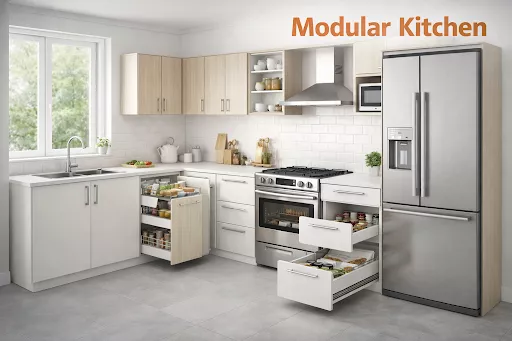
A modular kitchen is built from factory-made components designed to fit together efficiently. Each cabinet, drawer, and unit is pre-manufactured using standard dimensions, allowing for quicker assembly and installation on-site. Modular kitchens combine convenience with affordability, offering stylish results without the cost of bespoke joinery.
Key Features
Modular units are produced using precision machinery, ensuring consistency and reliability. Once delivered, installation usually takes between 3 and 7 days, making modular kitchens ideal for quick refurbishments or buy-to-let properties.
While design options are improving thanks to new finishes, handleless systems, and integrated lighting, modular kitchens still follow fixed dimensions. This means that while you can choose different colours, textures, and layouts, space utilisation isn’t as exact as a bespoke build.
Advantages
- Lower cost and faster delivery
- Streamlined installation process
- Easy maintenance and replacement of individual parts
- Ideal for new-builds and standard layouts
- Reliable quality from established brands
Limitations
Modular kitchens can struggle to fit perfectly in older or irregular London homes. Materials like MDF or particleboard are common in budget ranges, which may affect long-term durability. Designs can sometimes appear generic unless enhanced with custom elements such as lighting or unique worktops.
Custom vs Modular: Cost Comparison
Understanding how much a kitchen costs in London depends on size, materials, and labour. Here’s a breakdown:
Custom Kitchens
- Entry Level: £15,000–£25,000
- Mid-Range: £25,000–£40,000
- Premium Bespoke: £40,000–£100,000+
Modular Kitchens
- Budget Range: £5,000–£10,000
- Mid-Range: £10,000–£18,000
- High-End Modular: £18,000–£30,000
London’s higher labour costs, parking restrictions, and tighter delivery schedules mean installation prices are often 15–25% above the national average. Skilled kitchen fitters typically charge £200–£300 per day, depending on complexity and location.
Design Flexibility and Space Efficiency
Custom kitchens offer near-limitless flexibility. They’re ideal for homes with irregular layouts or distinctive architecture. For example, in a Victorian terrace, a bespoke kitchen can work around chimney breasts and bay windows without wasting valuable space.
Modular kitchens excel in straightforward spaces like modern apartments or new-build developments. They provide clean lines, contemporary styling, and efficient workflow at a lower price point, but can leave small gaps or filler panels in older homes.
Electrical Planning and Practicality
Many London homeowners underestimate the importance of electrical planning in their kitchen renovation. A modern kitchen supports a wide range of appliances, coffee machines, microwaves, induction hobs, dishwashers, and integrated lighting all of which demand sufficient and well-placed power sources.
Relying on a few old sockets or using extension leads is not just inconvenient, it’s unsafe. Proper planning ensures outlets are placed where they’re most useful, such as near preparation zones and islands. High-load appliances like ovens and large fridge-freezers also need dedicated circuits to prevent overloads and ensure smooth operation.
For open-plan designs or kitchens with islands, concealed floor sockets and integrated pop-up chargers can keep the space both functional and aesthetically clean. A certified electrician familiar with Part P of the UK Building Regulations should always oversee the installation, ensuring compliance and safety certification.
Compliance and Regulations
All kitchen work in London must comply with UK Building Regulations, including:
- Part P: Electrical safety and certification
- Part F: Proper ventilation and extraction
- Part B: Fire safety
- Part G: Water supply and sanitation
Listed properties or those in conservation areas (such as Westminster, Camden, or Kensington) may also require additional planning consent. Always confirm with your borough’s Building Control department before work begins.
Quality, Durability, and Value
Custom kitchens typically outperform modular designs in lifespan and finish quality. Their solid timber frames, handmade joints, and bespoke finishes can remain in excellent condition for decades. In contrast, modular kitchens, though durable, often rely on composite materials that wear faster.
However, modular kitchens have improved significantly in recent years. High-end European brands like Häcker and Nobilia now offer modular systems with robust hardware and premium veneers that rival custom designs visually, even if not structurally.
From a resale perspective, bespoke kitchens increase appeal in premium postcodes such as Hampstead, Richmond, and Chelsea, where buyers expect craftsmanship and unique detailing. For rental or mid-range properties, well-designed modular kitchens provide a strong return on investment.
Making the Right Choice for Your London Home
The decision ultimately depends on your priorities:
- Choose a custom kitchen if you want long-term value, superior craftsmanship, and a tailored fit that respects your home’s architecture.
- Choose a modular kitchen if you prioritise cost control, quick installation, and modern efficiency.
If you’re renovating an older London property, investing in a bespoke kitchen ensures design harmony and maximised storage. For newer flats or buy-to-let investments, a quality modular kitchen may be the more practical route.
FAQs
What is the main difference between a custom kitchen and a modular kitchen?
A custom kitchen is designed and built to your exact specifications, offering a perfect fit, premium materials, and a fully tailored finish. It works best for unique layouts and long-term investment. A modular kitchen uses pre-manufactured units that are quicker to install and more cost-effective, but they offer less design flexibility.
How much does a custom kitchen cost in London?
A custom kitchen in London typically costs between £15,000 and £50,000, depending on size, materials, and design complexity. High-end bespoke kitchens with luxury finishes and advanced features can exceed £100,000.
Can I combine custom and modular kitchen elements?
Yes. Many London homeowners choose a hybrid solution, using modular cabinets for standard units and adding custom-built features such as islands, storage walls, or statement cabinetry. This approach balances cost efficiency with bespoke design.
How long does it take to install a custom kitchen?
A custom kitchen usually takes 12 to 20 weeks from initial consultation to final installation. This timeline includes design development, manufacturing, and professional fitting.
Are modular kitchens cheaper than custom kitchens?
Yes. Modular kitchens are generally more affordable, with prices ranging from £5,000 to £30,000, depending on quality and layout. Custom kitchens are typically 30–50% more expensive due to bespoke craftsmanship and premium materials.
Do I need planning permission for a kitchen renovation in London?
Most kitchen renovations in London do not require planning permission. However, permission may be needed if you are removing load-bearing walls, altering services, renovating a listed building, or working within a conservation area. Always check with your local council before starting.
How long do modular kitchens last?
Most modular kitchens last 10 to 15 years, depending on material quality and usage. Higher-end modular systems can last longer and may offer durability similar to custom kitchens.
Will a custom kitchen add value to my home?
Yes. A well-designed custom kitchen can significantly increase property value, particularly in high-demand London areas. In some cases, a premium kitchen can add up to 10% to a home’s value, making it a strong long-term investment.
Conclusion
Both custom and modular kitchens can transform your home; what matters is aligning your choice with your lifestyle, property type, and budget. A custom kitchen offers timeless design, durability, and personal expression, while a modular kitchen delivers speed, affordability, and contemporary simplicity.
For homeowners across London and Greater London councils, the smartest approach is to begin with a professional consultation. A refurbishment specialist can evaluate your layout, estimate realistic costs, and guide you through compliance with local regulations.
If you’re ready to start planning, explore expert refurbishment services through Tacman Refurbishment, a trusted partner for London property upgrades, offering complete kitchen design, installation, and compliance support.