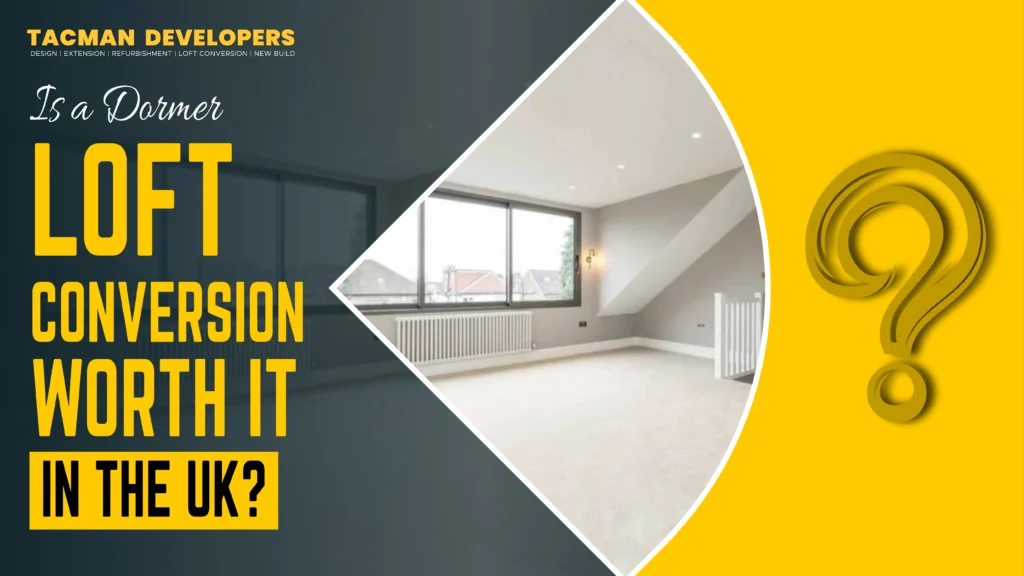
A dormer loft conversion in the UK is a structural extension added to a sloping roof to create extra headroom and usable floor space. Dormer conversions are among the most popular loft conversion types because they are cost-effective, suitable for many UK homes, and ideal for adding bedrooms, offices, or en-suite bathrooms while increasing property value.
As property prices continue to rise across the UK, more homeowners are choosing to improve their existing homes instead of moving. One of the most effective ways to create additional living space is through a dormer loft conversion. Whether you need an extra bedroom, a home office, or a modern en-suite master suite, dormer conversions offer a practical and value-boosting solution.
A well-designed dormer loft conversion can completely transform an underused attic into a bright, spacious, and functional area. It’s no surprise that dormers remain one of the most popular loft conversion choices in the UK, particularly for terraced and semi-detached homes where maximising space is essential.
However, before starting your project, it’s important to understand costs, planning permission rules, structural requirements, timelines, and design options. In this detailed 2026 guide, we’ll cover everything homeowners, investors, builders, and professionals need to know about dormer loft conversions in the UK, while also sharing practical insights from industry experience.
If you’re considering expanding your home, working with specialists in loft conversion services can help ensure your project is professionally planned and fully compliant with UK regulations.
What Is a Dormer Loft Conversion and How Does It Work?
A dormer loft conversion extends vertically from an existing sloping roof to create more headroom and usable floor space inside the loft.
A dormer loft conversion is one of the most practical and versatile ways to convert an attic into a liveable space. Unlike a standard loft conversion that relies on the existing roof structure, a dormer extends outward from the roof slope, creating additional vertical walls and a flat ceiling area. This dramatically increases usable floor space and improves comfort.
Dormers are particularly popular in the UK because many traditional homes have limited attic headroom. By adding a dormer structure, homeowners can create full-sized rooms instead of cramped attic spaces with awkward sloping ceilings.
Key Benefits of Dormer Loft Conversions
- Increased head height and floor space
- More natural light through larger windows
- Suitable for bedrooms, offices, and en-suites
- Adds significant property value
- More cost-effective than moving house
According to the Planning Portal UK, dormer conversions are among the most common loft alterations in Britain due to their flexibility and compatibility with permitted development rights.
For homeowners exploring different loft styles, Tacman Developers also provides a guide to different types of loft conversions to help determine the best option for your property.
Average Dormer Loft Conversion Cost in the UK in 2026
The average dormer loft conversion cost in the UK ranges from £35,000 to £75,000+ in 2026, depending on size, design, location, and finishes.
One of the first questions homeowners ask is how much a dormer loft conversion will cost. The answer depends on several factors, including property type, dormer size, structural complexity, and interior finishes.
Average Dormer Loft Conversion Costs UK 2026
| Type of Dormer | Estimated Cost |
| Small Dormer | £35,000 – £45,000 |
| Medium Dormer | £45,000 – £60,000 |
| Large Dormer with En-Suite | £60,000 – £75,000+ |
In London and surrounding areas, prices are often higher due to labour and material costs. Additional factors such as bespoke staircases, premium insulation, and luxury bathroom finishes can also increase the final budget.
Homeowners looking for regional pricing can explore this detailed guide on loft conversion costs in Windsor & Maidenhead, which provides useful local cost insights.
What Affects Dormer Loft Conversion Costs?
Several factors influence the final cost:
- Property size and roof structure
- Structural steel requirements
- Plumbing and electrical work
- En-suite bathroom installation
- Roofing materials and finishes
- Planning and architectural fees
While cheaper quotes may seem attractive initially, quality workmanship and compliance with building regulations are essential for long-term value and safety.
Rear Dormer vs Side Dormer: Which Is Right for Your Home?
Quick Answer (AEO):
Rear dormers maximise space at the back of the property, while side dormers are ideal for detached or semi-detached homes needing additional side-facing space.
Choosing between a rear dormer and a side dormer depends largely on your property type and goals.
Rear Dormer vs Side Dormer Comparison
| Feature | Rear Dormer | Side Dormer |
| Best For | Terraced homes | Semi-detached & detached |
| Space Added | Maximum rear space | Moderate side space |
| Visibility | Less visible from street | More visible |
| Popularity | Very common | Less common |
Rear dormers are the most popular choice in the UK because they create substantial additional floor space while usually remaining less visible from the street. Side dormers, however, can work exceptionally well on detached homes with wider roof structures.
Homeowners often combine dormers with creative layouts inspired by these top loft conversion ideas for UK homes to maximise both style and functionality.
Does a Dormer Loft Conversion Require Planning Permission?
Many dormer loft conversions fall under permitted development rights, but larger or front-facing dormers may require planning permission.
Planning permission is one of the biggest concerns for homeowners considering a dormer loft conversion. Fortunately, many projects can proceed under permitted development rights, meaning formal planning permission may not be necessary.
However, there are important limitations. For example:
- Dormers must not exceed maximum volume allowances
- Materials should match the existing property
- Front-facing dormers often require permission
- Conservation areas may have stricter rules
For official guidance, homeowners should refer to the UK Government Planning Portal, which outlines current permitted development regulations.
Even when planning permission is not required, building regulations approval is always necessary to ensure structural safety and fire compliance.
Dormer Design Ideas — Layout Options and En-Suite Configurations
Popular dormer layouts include master bedrooms with en-suites, home offices, guest suites, and family entertainment spaces.
Design flexibility is one of the biggest advantages of dormer loft conversions. The added headroom allows homeowners to create spaces that feel like natural extensions of the home rather than converted attics.
Popular Dormer Loft Layout Ideas
- Master bedroom with en-suite
- Children’s bedroom and play area
- Home office or studio
- Guest bedroom
- Cinema or entertainment room
Adding an en-suite bathroom is particularly popular because it increases both functionality and property value. Modern layouts often include walk-in showers, floating vanities, and roof windows to maximise natural light.
Design Features That Add Value
- Built-in storage under eaves
- Skylights and dormer windows
- Open-plan layouts
- Minimalist staircases
- Smart lighting systems
According to the Royal Institute of British Architects, thoughtful loft design can significantly improve usability and resale appeal.
Structural Requirements: Floor Joists, Steel Beams, Staircase
Dormer loft conversions require structural upgrades such as reinforced floor joists, steel beams, and compliant staircases.
A dormer conversion is not simply a cosmetic project—it involves significant structural engineering. Existing attic floors are rarely strong enough to support a liveable room, so reinforced joists are usually required.
Steel beams are often installed to redistribute loads and support the new dormer structure. These beams ensure stability and compliance with UK building regulations.
Key Structural Components
| Component | Purpose |
| Floor Joists | Support additional weight |
| Steel Beams | Structural reinforcement |
| Staircase | Safe loft access |
| Insulation | Thermal efficiency |
| Fire Doors | Safety compliance |
The staircase design is especially important. It must comply with minimum headroom and fire safety regulations while integrating naturally with the rest of the house.
How Long Does a Dormer Loft Conversion Take to Complete?
Most dormer loft conversions take between 6 and 12 weeks, depending on size and complexity.
Project timelines vary depending on weather conditions, design complexity, and property type. However, most standard dormer loft conversions follow a relatively predictable process.
Typical Timeline
- Planning and design — 2–6 weeks
- Structural work — 2–3 weeks
- Dormer construction — 2–4 weeks
- Internal finishing — 2–3 weeks
Larger projects with custom finishes or multiple rooms may take longer.
Dormer vs Velux vs Mansard — Full Cost and Suitability Comparison
Dormer loft conversions balance affordability and space, while Velux conversions are cheaper and mansards offer maximum space but higher costs.
Loft Conversion Comparison Table
| Type | Cost | Space Added | Planning Difficulty |
| Velux | Low | Minimal | Low |
| Dormer | Medium | High | Medium |
| Mansard | High | Maximum | High |
Dormers are often considered the best balance between cost, practicality, and added value for UK homeowners.
How Much Value Does a Dormer Loft Conversion Add?
A dormer loft conversion can increase UK property value by 15–25%, depending on location and quality.
Adding a dormer loft conversion is one of the most effective ways to increase property value. Extra bedrooms and bathrooms are highly attractive to buyers, particularly in high-demand areas.
For a detailed breakdown, homeowners can explore this guide on how much value a loft conversion adds in the UK.
Conclusion
A dormer loft conversion in the UK is one of the smartest ways to unlock additional living space without sacrificing garden area or moving home. From creating luxurious master suites to practical home offices, dormers offer flexibility, strong return on investment, and excellent long-term value.
By understanding costs, planning rules, structural requirements, and design possibilities, homeowners can approach their projects with confidence. Most importantly, working with experienced specialists ensures your conversion is safe, compliant, and built to a high standard.
Whether you’re just exploring ideas or ready to begin your project, professional guidance can make the entire process smoother and more cost-effective.
Ready to transform your loft into a spacious, high-value living area? Contact Tacman Developers today for expert advice, planning, and construction support tailored to your home and goals.
FAQs
Is a dormer loft conversion worth it?
Yes, it creates valuable living space and can significantly increase property value.
Can all houses have a dormer loft conversion?
Most UK homes are suitable, but roof structure and head height must be assessed first.
Do dormers leak more than normal roofs?
Not when properly designed and installed by experienced professionals.
Is a dormer better than a Velux conversion?
Dormers provide much more usable space, making them more suitable for bedrooms and en-suites.
Can I add an en-suite bathroom?
Yes, many dormer conversions include en-suite bathrooms with plumbing integrated into the design.
Do I need an architect?
For most projects, professional design and structural planning are strongly recommended.