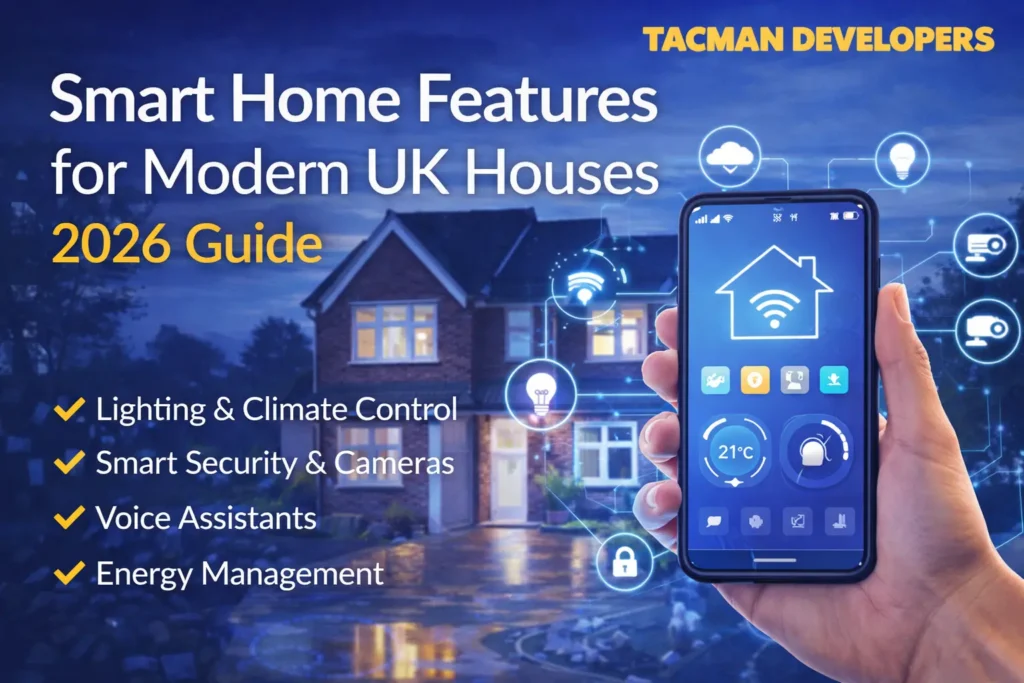
Smart home features are intelligent systems such as smart lighting, heating, security, and automation that allow homeowners to control and optimize their homes remotely. In the UK, these technologies are widely used to improve energy efficiency, enhance security, and create more convenient and connected living environments.
The concept of a “smart home” has evolved rapidly over the past decade. What was once considered a futuristic luxury is now becoming a standard expectation in modern UK homes. From intelligent heating systems that learn your routine to security cameras you can monitor from anywhere in the world, smart home features are reshaping how people interact with their living spaces.
In cities like London, where property prices are high and efficiency matters, homeowners and investors are increasingly turning to smart technologies to maximise both comfort and value. But this trend is not limited to urban areas. Across the UK and globally, families, professionals, and businesses are embracing smart solutions to create safer, more efficient, and more convenient environments.
This guide goes beyond surface-level ideas. You’ll discover not only the most important smart home features, but also how they work, where they add the most value, how to integrate them into different types of properties, and how to avoid common mistakes. With expert insights and practical examples, this article is designed to help you make informed, future-ready decisions.
What Is a Smart Home?
A smart home is a property equipped with connected devices that automate and control systems like lighting, heating, security, and appliances through a smartphone, voice assistant, or central hub.
A smart home uses internet-connected devices to manage everyday household functions more efficiently. Instead of manually controlling lights, heating, or security systems, homeowners can automate these processes or control them remotely using apps or voice commands.
For example, you can turn off lights from your phone while at work or adjust your heating before arriving home. This level of control improves convenience, reduces energy waste, and enhances overall comfort.
In the UK, smart homes are becoming increasingly common, especially in urban areas like London, where efficiency and modern living standards are highly valued.
Why Smart Home Features Are Growing in the UK
Smart home adoption in the UK is increasing due to rising energy costs, demand for convenience, improved security needs, and advancements in connected technology.
The growth of smart home technology in the UK is not just a trend; it reflects a broader shift in how people think about their homes. Rising energy costs have made efficiency a top priority, and smart systems offer a practical way to monitor and reduce consumption without sacrificing comfort.
For example, smart thermostats can automatically adjust heating based on occupancy and usage patterns. According to the Energy Saving Trust UK, efficient heating controls can significantly reduce household energy bills, making them one of the most cost-effective upgrades for UK homes.
Another major factor is security. With the increasing availability of smart cameras, alarms, and doorbell systems, homeowners can now monitor their properties in real time from anywhere in the world. This level of control provides peace of mind, particularly for families and property investors.
Additionally, the integration of smart features into property design is becoming more common. Many homeowners now incorporate these technologies during home design planning to ensure seamless functionality and long-term usability.
Smart Home Adoption Trends in the UK
Smart home adoption in the UK is rapidly increasing, driven by energy efficiency needs, security concerns, and advancements in affordable technology.
Smart home technology is no longer limited to high-end properties. According to industry trends and insights from organisations like Statista, the number of UK households using smart devices has grown significantly over recent years.
Several key trends are shaping this growth:
- Increased demand for energy-efficient homes
- Rising interest in remote home management
- Growth of voice assistant ecosystems
- Integration of smart tech in new builds and renovations
In London, particularly, smart features are often seen as a premium upgrade that enhances both lifestyle and property value.
Core Smart Home Features Every UK Home Should Have
Essential smart home features include smart lighting, thermostats, security systems, voice assistants, and connected appliances that improve comfort and efficiency.
A modern smart home is built on a foundation of core technologies that work together to create a connected environment. These features are not only practical but also form the basis for more advanced automation systems.
Smart Lighting Systems
Smart lighting is one of the easiest and most effective upgrades. It allows homeowners to control brightness, colour temperature, and schedules through mobile apps or voice commands. This not only improves convenience but also contributes to energy savings.
Smart Thermostats and Climate Control
Heating is one of the largest expenses in UK homes, making smart thermostats a highly valuable investment. These systems learn your habits and adjust heating automatically, ensuring optimal comfort while reducing waste.
Many homeowners choose to install these systems during property refurbishment projects, where upgrading infrastructure is already part of the process.
Smart Security Systems
Modern security systems go far beyond traditional alarms. They include high-definition cameras, motion sensors, smart locks, and video doorbells. These systems can be monitored remotely, providing real-time alerts and complete control over your home’s security.
For best practices in home security, organisations like the National Cyber Security Centre UK provide guidance on securing connected devices and protecting personal data.
Voice Assistants and Central Control
Voice assistants act as the central hub for your smart home. They allow you to control multiple devices using simple commands, making everyday tasks faster and more convenient.
Smart Appliances
Smart appliances add another layer of convenience by allowing remote operation and automation. From ovens that preheat before you arrive home to washing machines that run during off-peak hours, these features make daily life more efficient.
How Smart Home Systems Work Together
Smart home systems work by connecting devices through a central hub or platform, allowing them to communicate and automate tasks seamlessly.
One of the most important aspects of a smart home is how different devices interact with each other. Rather than operating independently, smart devices are designed to work as part of an ecosystem.
For example, a motion sensor can trigger lights to turn on, while a smart thermostat adjusts temperature based on occupancy. These interactions create a seamless and automated living experience.
Advanced Smart Home Features for Future Ready Living
Advanced smart features include full home automation, AI powered systems, energy monitoring, and integrated entertainment solutions.
As technology continues to evolve, homeowners are increasingly adopting advanced systems that go beyond basic functionality. These features transform homes into fully integrated environments where everything works together seamlessly.
Whole Home Automation Systems
A fully automated home connects all devices into a single ecosystem. This allows you to create customised routines, for example, a “morning mode” that adjusts lighting, heating, and blinds simultaneously.
Smart Energy Management
Energy monitoring systems provide detailed insights into how energy is used in your home. This allows you to identify inefficiencies and make adjustments that reduce costs and environmental impact.
AI and Predictive Technology
Some smart systems now use artificial intelligence to predict user behaviour and adjust settings automatically. This creates a more personalised and efficient living experience.
Smart Entertainment Integration
Modern homes often include integrated entertainment systems, combining smart TVs, speakers, and streaming services into a unified setup.
These advanced features are particularly effective when integrated during new build developments, where infrastructure can be designed specifically for smart technology.
Smart Home Security & Data Privacy
Smart home security includes protecting both your property and your data through secure devices, encryption, and proper configuration.
While smart home features improve physical security, they also introduce digital risks if not properly managed. Devices connected to the internet can be vulnerable if security measures are weak.
To protect your home:
- Use strong passwords and two-factor authentication
- Regularly update device software
- Choose trusted brands with security certifications
The National Cyber Security Centre UK recommends following best practices to ensure smart devices remain secure and reliable.
For homeowners and investors, prioritising both physical and digital security is essential when building a modern smart home.
Smart Home Integration Across Property Types
Smart features can be tailored for extensions, loft conversions, new builds, and refurbishments to maximise efficiency and usability.
Smart technology is not limited to new homes. It can be integrated into various types of property projects, each offering unique opportunities.
Extensions
When adding new space through home extensions, integrating smart lighting, heating, and entertainment systems ensures the new area is fully functional and future-ready.
Loft Conversions
Loft spaces benefit greatly from smart climate control and lighting. During loft conversion projects, these features can be installed to improve comfort and usability.
Refurbishments
Older properties can be upgraded with smart systems during renovations, improving both efficiency and value.
Benefits of Smart Home Features
Smart home features improve convenience, security, energy efficiency, and property value.
Smart homes offer a wide range of benefits that go beyond simple convenience. They allow homeowners to create a more comfortable and efficient living environment while also increasing property appeal.
Key Benefits
- Improved energy efficiency and lower bills
- Enhanced security and monitoring
- Greater convenience and automation
- Increased property value and appeal
According to the Energy Saving Trust UK, energy-efficient technologies can significantly reduce household energy consumption, making smart homes both practical and environmentally friendly.
Costs of Smart Home Features in the UK
Costs range from £500 for basic setups to over £10,000 for fully integrated smart homes.
Cost Overview
Feature |
Estimated Cost |
Smart Lighting |
£200 – £1,200 |
Thermostat |
£150 – £400 |
Security System |
£500 – £3,000 |
Full Automation |
£5,000 – £10,000+ |
Costs vary depending on the level of integration and property size. Investing in scalable systems allows you to expand over time.
Smart Home Installation: DIY vs Professional Setup
Smart home systems can be installed DIY for basic setups, but professional installation ensures better integration, reliability, and long-term performance.
Many smart devices are designed for easy installation, making DIY setups appealing. However, as systems become more complex, professional installation becomes increasingly valuable.
DIY Setup (Best For):
- Basic lighting systems
- Smart plugs and assistants
Professional Installation (Best For):
- Full home automation
- Security systems
- Integrated smart homes
Common Mistakes to Avoid
Avoid poor planning, incompatible devices, and lack of security awareness.
Many homeowners install smart devices without a clear plan, leading to compatibility issues and inefficient setups. It’s important to choose systems that work together and can be expanded in the future.
Security is another critical factor. Poorly secured devices can create vulnerabilities, so it’s essential to follow best practices and use trusted brands.
How Tacman Developers Can Help
Tacman Developers integrates smart home technology into design, construction, and renovation projects for modern living.
Tacman Developers specialises in creating modern, future-ready homes by integrating smart technology into every stage of the project. Whether you are planning a new build, extension, or refurbishment, their team ensures that smart features are seamlessly incorporated into the design.
By combining technical expertise with practical experience, they help homeowners create spaces that are not only visually impressive but also highly functional and efficient.
Conclusion
Smart home features are no longer optional; they are becoming a fundamental part of modern living in the UK. From improving energy efficiency to enhancing security and convenience, these technologies offer practical benefits that make everyday life easier and more efficient.
By integrating smart systems into your home, whether through a new build, extension, or renovation, you can create a future-ready environment that adapts to your lifestyle. The key is to plan carefully, choose the right technologies, and work with experienced professionals who understand how to implement them effectively.
Ready to transform your home into a smart, future-ready space? Tacman Developers can design and integrate advanced smart home features tailored to your needs, ensuring comfort, efficiency, and long-term value.
Start your smart home journey today and upgrade the way you live.
FAQs
What are smart home features?
Smart home features are connected technologies that automate and control home systems like lighting, heating, and security.
Do smart homes save energy?
Yes, they optimize energy usage and reduce waste, helping lower utility bills.
Are smart home systems expensive?
Basic systems are affordable, while advanced automation requires a higher investment.
Can smart features be added to old homes?
Yes, they can be installed during refurbishment or as standalone upgrades.
Are smart homes secure?
Yes, if properly configured, they provide enhanced security and monitoring.