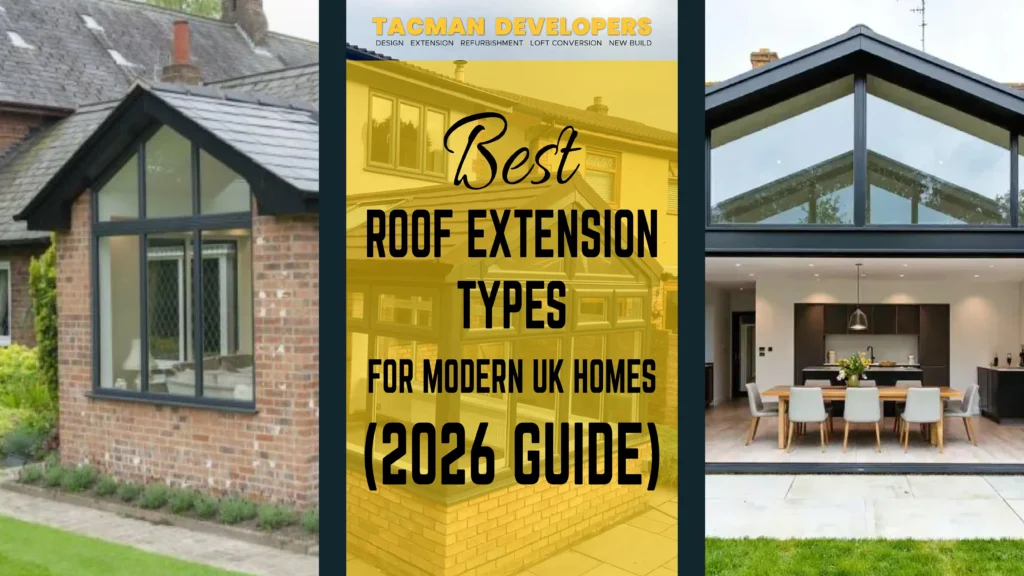
The best roof extension types for UK homes include dormer extensions, mansard roofs, hip to gable conversions, rooflight extensions, and flat roof extensions. These options help homeowners create more living space, improve natural light, and increase property value while complying with UK planning and building regulations.
As UK property prices continue to rise and space becomes increasingly limited, especially in cities like London, more homeowners are looking upward instead of outward. Roof extensions have become one of the smartest ways to unlock unused space, increase property value, and modernise existing homes without sacrificing garden areas.
Whether you want to create an extra bedroom, a stylish home office, a larger family living area, or even additional office space for remote work, understanding the different roof extension types is essential before starting your project. The right roof extension can dramatically transform both the appearance and functionality of your property while adding long-term value.
In recent years, modern roof extension designs have evolved far beyond basic loft spaces. Today’s homeowners are investing in contemporary dormers, glass roof additions, mansard conversions, and architecturally striking extensions that maximize natural light and energy efficiency. For investors and professionals, roof extensions also provide excellent opportunities to improve rental yield and market appeal.
In this comprehensive 2026 guide, we’ll explore the best roof extension types for modern UK homes, their advantages, costs, design considerations, planning rules, and common mistakes to avoid. We’ll also show how expert planning and design services from Tacman Developers can help you achieve a high-quality, fully compliant result.
Why Roof Extensions Are So Popular in the UK
Roof extensions are popular because they create additional living space, increase property value, improve natural light, and avoid the need to move houses.
Roof extensions have become increasingly popular across the UK because they offer a practical solution to one of the country’s biggest housing challenges: lack of space. In dense urban areas like London, extending upward is often more feasible than extending outward, particularly for terraced and semi-detached homes where garden space is limited.
For many families, moving to a larger property is simply too expensive. Stamp duty, legal fees, and rising property prices make relocation financially challenging. A roof extension allows homeowners to expand their current home instead, often at a lower overall cost than moving.
Another major factor driving demand is lifestyle change. Remote working, growing families, and the increasing need for multifunctional living spaces have all contributed to the rise in roof extension projects. Homeowners are now converting unused lofts and roof areas into bedrooms, offices, gyms, and entertainment spaces.
According to the Planning Portal UK, roof extensions can also significantly improve property value when professionally designed and compliant with UK regulations.
If you’re considering expanding your property, professional home extension services can help you assess the most suitable extension type for your home and budget.
What Is a Roof Extension?
A roof extension is a structural modification that expands or alters a property’s roof space to create additional usable interior space.
A roof extension involves changing the structure or shape of an existing roof to create more internal space. Unlike a standard loft conversion, which mainly transforms the interior attic area, roof extensions often involve significant structural modifications such as raising roof height, altering roof slopes, or adding external roof structures.
Roof extensions are highly versatile and can be adapted to suit different property styles, from traditional Victorian terraces to modern detached homes. They can be designed to accommodate bedrooms, offices, studios, kitchens, or even entire apartment-style living areas.
Modern roof extensions also focus heavily on aesthetics and energy efficiency. Many homeowners now incorporate large rooflights, glass panels, and contemporary cladding materials to create bright, modern spaces that blend seamlessly with the existing architecture.
Main Roof Extension Types for UK Homes
The most common roof extension types include dormer, mansard, hip to gable, rooflight, flat roof, and modular roof extensions.
Understanding the different roof extension types is essential because each option offers different advantages depending on your property type, budget, and goals.
Roof Extension Types Comparison Table
| Roof Extension Type | Best For | Main Benefit |
| Dormer Extension | Terraced homes | Extra headroom |
| Mansard Extension | Urban properties | Maximum space |
| Hip to Gable | Semi-detached homes | Wider loft area |
| Rooflight Extension | Budget projects | Minimal structural changes |
| Flat Roof Extension | Modern homes | Contemporary appearance |
| Modular Roof Extension | Fast installation | Reduced construction time |
Dormer Roof Extensions
Dormer extensions are among the most popular roof extension types in the UK because they offer a strong balance between cost, practicality, and visual appeal. A dormer structure extends outward from the roof, creating vertical walls and a flat or pitched roof section.
One of the biggest advantages of dormers is the significant increase in usable interior space. They create better ceiling height and allow for larger windows, bringing more natural light into the property.
Dormer extensions are particularly common in London terraced homes where maximising internal space is essential. Many homeowners also combine dormers with modern interior redesigns for a complete transformation.
If you’re exploring modern space-saving ideas, this guide on small home extension ideas in the UK provides additional inspiration for compact properties.
Mansard Roof Extensions
Mansard extensions are often considered the premium option for roof conversions because they dramatically increase usable floor area. These extensions typically involve replacing one side of the roof with a steep slope and a flat roof section.
This design style is particularly popular in London due to its ability to maximise living space while maintaining an elegant appearance. Mansard extensions are ideal for homeowners looking to create large bedrooms, luxury suites, or spacious office areas.
Because they involve major structural alterations, mansard projects usually require planning permission and detailed architectural planning. Working with experienced professionals through expert design and architectural services is essential for achieving the best results.
Hip to Gable Roof Extensions
Hip-to-gable roof extensions are commonly used on semi-detached and detached homes with hipped roofs. By extending the sloped side into a vertical gable wall, homeowners can significantly increase loft space and improve layout flexibility.
This extension type is highly effective for creating additional bedrooms or larger office spaces. It also blends naturally with many UK property styles, making it a visually attractive option.
Many homeowners combine hip to gable extensions with rear dormers to maximise both width and headroom.
Rooflight Extensions
Rooflight extensions add skylights or roof windows without significantly altering the roof structure.
Rooflight extensions are one of the simplest and most affordable options for homeowners who want to improve loft usability without major structural work. These extensions typically involve installing skylights or roof windows while retaining the existing roof shape.
They are particularly suitable for properties where planning restrictions limit external alterations. Rooflights bring substantial natural light into the space, making smaller lofts feel brighter and more spacious.
According to the UK Government Building Regulations, rooflight installations must still comply with structural and energy efficiency requirements.
Flat Roof Extensions
Flat roof extensions create clean, modern architectural lines and are ideal for contemporary homes.
Flat roof extensions have become increasingly popular in modern UK architecture. They are often used for rear kitchen extensions, rooftop additions, and contemporary home redesigns.
One of the biggest benefits of flat roofs is design flexibility. Homeowners can incorporate roof lanterns, skylights, and even rooftop terraces for a highly modern appearance.
For luxury projects, many homeowners combine flat roof designs with premium finishes inspired by modern luxury home extension ideas.
Best Roof Extension for Terraced Homes
Dormer and mansard extensions are usually the best options for terraced UK homes because they maximise space efficiently.
Terraced properties are among the most common home styles in the UK, particularly in London. Because these homes often have limited width and outdoor space, roof extensions are one of the most practical ways to expand living areas.
Dormers are usually the most cost effective option, while mansard extensions provide maximum space for homeowners seeking larger transformations.
This guide on terraced house extension ideas in the UK explores additional smart solutions specifically designed for terraced properties.
Roof Extension Costs in the UK
Roof extension costs in the UK typically range from £20,000 to £80,000+, depending on complexity and design.
Planning Permission & Building Regulations
Many roof extensions fall under permitted development, but larger structural changes often require planning permission.
Planning requirements depend on the scale and design of the extension. Smaller rooflight and dormer projects may fall under permitted development rights, while mansard and large structural extensions usually require formal planning approval.
Regardless of planning permission, all roof extensions must comply with building regulations covering:
- Structural safety
- Fire protection
- Insulation
- Ventilation
- Staircase safety
The official Planning Portal UK provides useful guidance for homeowners navigating these requirements.
Common Roof Extension Mistakes to Avoid
Common mistakes include poor planning, low-quality design, ignoring regulations, and underestimating costs.
Many roof extension problems stem from inadequate planning. Homeowners often focus too heavily on aesthetics without considering structure, functionality, or long-term usability.
Common mistakes include:
- Ignoring building regulations
- Choosing poor layouts
- Hiring inexperienced contractors
- Underestimating total costs
- Poor insulation planning
Working with experienced professionals helps minimise these risks and ensures a smoother construction process.
How Tacman Developers Can Help
Tacman Developers provides expert planning, design, and construction services for high-quality roof extensions across the UK.
Roof extensions require specialist knowledge, technical expertise, and careful planning. Tacman Developers offers a complete end-to-end solution, helping homeowners transform unused roof space into practical, stylish living areas.
From planning and architectural design to construction and compliance, their team ensures every project is delivered to the highest standard.
Whether you’re considering a roof extension, modern kitchen upgrade, or exploring kitchen extension ideas for UK homes, professional support can make the entire process significantly smoother.
Conclusion
Choosing the right roof extension type can completely transform your home, creating valuable additional space while improving functionality, comfort, and property value. From practical dormer extensions to luxury mansard designs, modern UK homeowners now have more options than ever before.
The key to a successful project lies in careful planning, expert design, and professional construction. By understanding the advantages, costs, and planning requirements of each extension type, you can make informed decisions that deliver long-term value and lifestyle improvements.
Whether you’re expanding for a growing family, creating a home office, or investing in property upgrades, a professionally designed roof extension is one of the smartest ways to future-proof your home.
Ready to transform your unused roof space into something exceptional? Tacman Developers specialises in modern, fully compliant roof extensions tailored to UK homes. From planning and design to construction and finishing, their team helps bring your vision to life with expert craftsmanship and attention to detail.
Start your roof extension project today and unlock your home’s full potential.
FAQs
Which roof extension adds the most value?
Mansard and dormer extensions usually provide the highest increase in property value due to the additional usable space they create.
What is the cheapest roof extension type?
Rooflight extensions are generally the most affordable because they require fewer structural changes.
Do roof extensions need planning permission?
Some projects fall under permitted development, but larger extensions usually require formal approval.
How long does a roof extension take?
Most roof extension projects take between 6 and 16 weeks, depending on complexity.
Are roof extensions worth the investment?
Yes, professionally designed roof extensions often significantly improve both living space and property value.