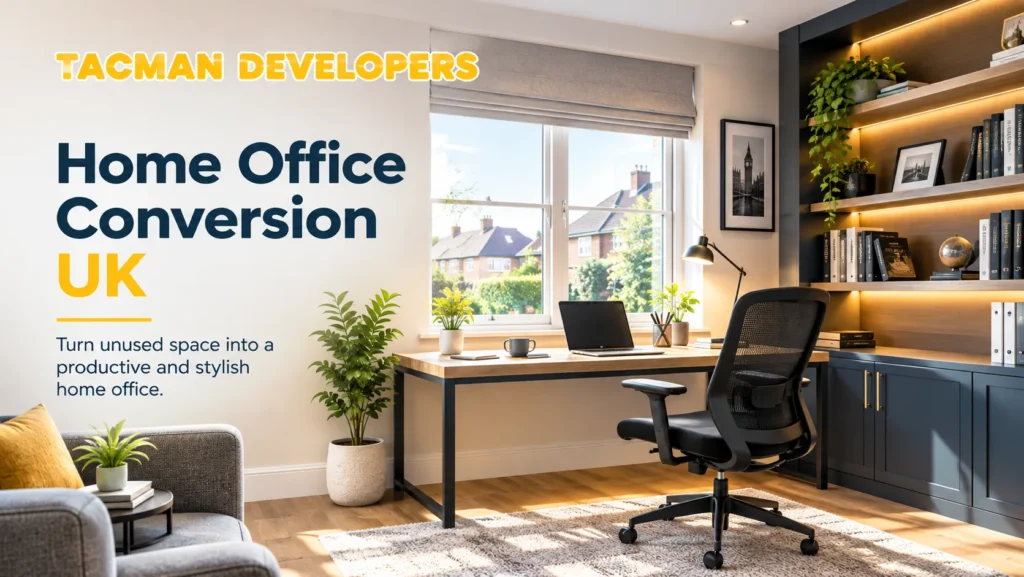
The cost of a home office conversion in the UK typically ranges from around £2,000 for a simple room makeover to £45,000+ for a bespoke loft or garage conversion. The total cost depends on the space being converted, structural work required, insulation, electrical upgrades, and the quality of finishes. Choosing the right location and planning the layout carefully can create a comfortable workspace while also adding value to your home.
Hybrid and remote working have transformed the way many people use their homes. What was once a spare bedroom, unused loft, garage, or underutilised corner has become valuable workspace for professionals, business owners, freelancers, and growing families. As flexible working continues to grow across the UK, homeowners are increasingly investing in dedicated offices that improve productivity while enhancing the overall functionality of their property.
One of the first questions most homeowners ask is about the home office conversion cost in the UK. The answer varies depending on the size of the project, the space being converted, and the level of finish you’re aiming for. A simple spare room refresh may cost only a few thousand pounds, while converting a loft or garage into a fully insulated office with bespoke storage, high speed connectivity, and premium finishes requires a larger investment.
At Tacman Developers, we’ve helped homeowners transform unused spaces into practical, stylish offices that blend seamlessly with the rest of the home. Whether you’re considering a loft conversion to create a quiet workspace or planning a complete home refurbishment that includes a dedicated office, careful planning is essential to achieving the best results.
Why Home Office Conversions Are More Popular Than Ever
Home office conversions have become increasingly popular because hybrid working has created long term demand for dedicated workspaces. Rather than working from kitchen tables or shared living areas, many UK homeowners are investing in permanent offices that improve productivity, comfort, and property value.
Working from home is no longer a temporary trend. For many professionals, it’s now a permanent part of everyday life. Businesses across the UK continue to adopt hybrid working models, allowing employees to split their time between the office and home. At the same time, self employed professionals, consultants, designers, and online business owners increasingly require dedicated workspaces that support concentration and professionalism.
For homeowners already considering wider improvements, combining a home office conversion with a complete home refurbishment reading often provides better value than tackling multiple projects separately. Renovating several areas at the same time can improve design consistency, reduce disruption, and streamline construction costs.
According to guidance from Ofcom, reliable broadband has become an essential utility for modern households, particularly as remote working and video conferencing continue to increase. Likewise, the Royal Institution of Chartered Surveyors (RICS) highlights that flexible living spaces remain an important consideration for many homebuyers, reinforcing the long-term appeal of adaptable home layouts.
Where Can You Create a Home Office?
The best location for a home office depends on your available space, budget, and working style. Popular options include a spare bedroom, loft conversion, garage conversion, garden office, or even an under stair workspace for occasional use.
One of the biggest advantages of a home office conversion is that it doesn’t always require an extension or major structural alterations. Many homes already have underused areas that thoughtful planning and professional design can transform into highly functional workspaces.
The right location depends on several factors, including how often you’ll work from home, whether privacy is important, and how much space you require for equipment, storage, and meetings.
Spare Bedroom Home Office
For many homeowners, the spare bedroom is the simplest and most cost-effective place to create a dedicated office.
Because the room already has walls, heating, lighting, and electrical services, the project often involves cosmetic improvements rather than structural alterations. New flooring, built-in storage, upgraded lighting, acoustic treatments, and ergonomic furniture can transform an ordinary bedroom into a productive workspace.
Loft Conversion Home Office
A loft conversion creates one of the quietest and most private home office environments, making it ideal for professionals who regularly attend virtual meetings or require uninterrupted concentration.
Converting a loft into a home office is an increasingly popular choice throughout the UK. By utilising previously unused roof space, homeowners can create a completely separate working environment away from the distractions of everyday family life.
Loft offices are especially attractive because they often benefit from excellent natural light through roof windows or dormers, helping create an open and inspiring place to work. Additional features such as bespoke shelving, integrated storage, sound insulation, and modern heating systems can transform the loft into a comfortable office that’s suitable for year round use.
If you’re considering this option, Tacman Developers’ guide to how much a loft conversion costs in Reading provides useful insights into budgeting, while the article on loft conversions in Uxbridge, West London explores planning and design considerations that may also apply to similar properties elsewhere in the UK.
Garage Conversion Home Office
A garage conversion offers another excellent opportunity to create dedicated workspace without extending your property’s footprint.
Because garages are already enclosed structures, converting them into offices can often be more straightforward than building a new extension. However, insulation, ventilation, heating, and flooring usually require upgrading to meet modern comfort standards.
Many homeowners choose this option when they no longer require enclosed vehicle storage or already have off-street parking available.
A professionally designed garage office can comfortably accommodate:
- Large workstations.
- Dual monitor setups.
- Client meeting areas.
- Creative studios.
- Home-based businesses.
Garden Office
Garden offices provide complete separation between work and home life, making them ideal for professionals who require privacy, regular video meetings, or space for client appointments.
Purpose-built garden offices have become increasingly popular as remote working continues to grow. Unlike internal conversions, a garden office creates a dedicated workspace completely separate from the main house, helping many people achieve a healthier work-life balance.
Modern garden offices can include:
- Full insulation.
- Heating and cooling.
- High-speed broadband.
- Soundproof construction.
- Kitchenette facilities.
- WC facilities (where appropriate).
Although generally more expensive than converting an existing room, they offer exceptional flexibility for long term home working.
Homeowners should always check whether planning permission or Building Regulations apply before beginning construction. Guidance is available from the Planning Portal, while professional advice should be obtained for larger or more complex projects.
Under Stair or Multi-Use Home Office
Not everyone has a spare room or loft available. For smaller homes, creative design solutions can transform previously unused areas into surprisingly effective workspaces. Bespoke desks, built-in shelving, hidden storage, and carefully planned lighting can create functional offices beneath staircases or within open-plan living areas.
While these compact offices may not suit full-time remote workers, they can work extremely well for occasional home working, studying, or managing household administration.
Which Home Office Option Is Right for You?
| Option | Best For | Relative Cost |
| Spare Bedroom | Hybrid workers | Low |
| Loft Conversion | Full-time remote working | High |
| Garage Conversion | Home businesses | Medium–High |
| Garden Office | Professional workspace | High |
| Under Stair Office | Occasional use | Low |
The right solution depends on your available space, budget, and long term plans. If your goal is to maximise both functionality and property value, a professionally designed loft conversion or refurbishment often provides the greatest flexibility while integrating naturally with the existing home.
Home Office Conversion Cost UK (2026)
The home office conversion cost UK typically ranges from £2,000 to £40,000+ in 2026. A simple spare room makeover may cost between £2,000 and £6,000, while a fully insulated loft or garage conversion with bespoke joinery, electrical upgrades, and premium finishes can exceed £40,000. The final cost depends on the size of the space, structural work required, and the quality of materials chosen.
One of the biggest advantages of creating a home office is that there’s a solution for almost every budget. Some homeowners simply refresh an existing room with improved lighting, flooring, and fitted furniture, while others invest in a complete loft or garage conversion to create a dedicated workspace separate from the rest of the home.
The best option depends on your property’s layout, your work requirements, and whether you see the office as a short term improvement or a long term investment.
Average Home Office Conversion Costs
| Project Type | Typical Cost (2026) | Best For |
| Spare room refresh | £2,000–£6,000 | Hybrid workers |
| Spare room with bespoke storage | £6,000–£10,000 | Professionals |
| Garage conversion | £12,000–£25,000+ | Full time home office |
| Loft office conversion | £20,000–£40,000+ | Permanent workspace |
| Garden office | £15,000–£35,000+ | Separate office building |
| Luxury bespoke office | £40,000+ | Premium home working |
Figures are approximate UK estimates for 2026. Final costs vary depending on property type, specification, location, and project complexity.
If you’re comparing different ways to gain extra room, Tacman Developers’ guide on Loft Conversion vs House Extension in the UK explains the advantages of each option and helps homeowners decide which solution best suits their property.
Is a Loft Conversion Worth the Extra Cost?
Although loft conversions require a higher initial investment, they create entirely new living space that can serve as a home office today and a bedroom, studio, or guest suite in the future.
Unlike converting an existing bedroom, a loft conversion expands your home’s usable floor area without reducing existing living space.
This flexibility is particularly valuable for growing families and homeowners planning to stay in their property for many years. A well-designed loft office can easily be adapted into a nursery, hobby room, or additional bedroom if your needs change.
Should You Combine Your Home Office with a Wider Renovation?
Many homeowners find it more cost effective to complete several improvements at the same time rather than renovating room by room.
For example, combining a home office conversion with a modern kitchen renovation or bathroom refurbishment allows trades to work more efficiently while reducing disruption to everyday life.
Common Home Office Conversion Mistakes to Avoid
The most successful home office conversions are carefully planned from the start. Avoiding common design and budgeting mistakes can save money, improve productivity, and ensure the space remains useful for years to come.
Creating a home office is more than placing a desk in an empty room. A poorly planned workspace can quickly become uncomfortable, cluttered, or unsuitable for everyday use. Before starting your project, consider these common mistakes.
Choosing the Wrong Location
A home office should provide privacy and minimise distractions. Placing your workspace in a noisy part of the house or a busy family area can reduce productivity and make video meetings difficult.
Underestimating Storage Requirements
Many homeowners focus on desks and seating but forget about storage. Built in shelving, filing cabinets, and concealed storage help keep the workspace organised and clutter free.
Ignoring Lighting and Ventilation
Natural light, fresh air, and good ventilation contribute to a healthier working environment. Poor lighting or inadequate airflow can make the office uncomfortable during long working hours.
Forgetting Future Flexibility
Your needs may change over time. Designing a room that can later become a guest bedroom, study, or hobby room helps maximise your investment and increases your home’s appeal to future buyers.
Hiring Contractors Based on Price Alone
The cheapest quotation isn’t always the best value. Experienced builders provide transparent pricing, quality workmanship, and compliance with Building Regulations, reducing the risk of costly problems later.
Conclusion
A dedicated home office is no longer a luxury—it’s an investment in your productivity, comfort, and property’s future value. Whether you’re refreshing a spare bedroom, converting a loft, or creating a bespoke workspace, choosing the right design and construction approach will ensure the space meets your needs for years to come.
Understanding the home office conversion cost UK is the first step towards planning a successful project. While costs vary depending on the type of conversion and level of specification, investing in quality materials, professional workmanship, and thoughtful design can deliver lasting benefits. Features such as good insulation, natural light, reliable broadband, and built in storage not only improve your daily working experience but also enhance your home’s appeal to future buyers.
Whether you’re planning a loft office, garage conversion, or a complete home refurbishment, Tacman Developers can help bring your vision to life with expert advice, transparent pricing, and exceptional workmanship. Visit our Contact Page to discuss your project with our team and arrange a consultation.
Frequently Asked Questions
How much does a home office conversion cost in the UK?
A home office conversion typically costs between £2,000 and £40,000+, depending on the space, structural work, and specification. Loft and garage conversions generally cost more than converting a spare room.
Is a loft suitable for a home office?
Yes. Loft conversions provide privacy, excellent natural light, and separation from busy living areas, making them ideal for full time remote working.
Does a home office add value to a property?
A well-designed home office can increase buyer appeal and may add value, particularly if it creates flexible living space that can be used for different purposes.
Do I need planning permission for a home office?
Many internal home office projects don’t require planning permission, but larger loft, garage, or garden office conversions may. Always check the Planning Portal or consult your local authority.
Can I convert my garage into a home office?
Yes. Garage conversions are a popular way to create dedicated workspace without extending your home, provided the space is properly insulated and upgraded.